
Washing machine overloading is one of the most widespread yet entirely preventable causes of premature mechanical breakdown. Because the resulting damage is progressive rather than immediate, the risk is frequently underestimated. A single overloaded cycle will rarely cause an instant catastrophic failure; instead, chronic overfilling subjects the machine to extreme rotational torque and unbalanced centrifugal forces that steadily degrade internal assemblies. Once dry fabrics absorb water, their weight multiplies exponentially, transforming an overpacked drum into an unstable, heavy mass that strains the appliance’s structural framework at spin speeds exceeding one thousand rotations per minute.
Eliminating this damage requires replacing visual guesswork with precise mechanical standards. This guide establishes the definitive capacity benchmarks across different machine types, explains the physics of how excess mass translates into component fatigue, and highlights the specific parts including rear drum bearings, suspension dampers, spider brackets, and drive motors that fail first under sustained overload. By following these clear operational guidelines, you can protect your appliance from costly structural repairs and extend its reliable working life.
What Counts as Overloading? Capacity Guidelines by Machine Type
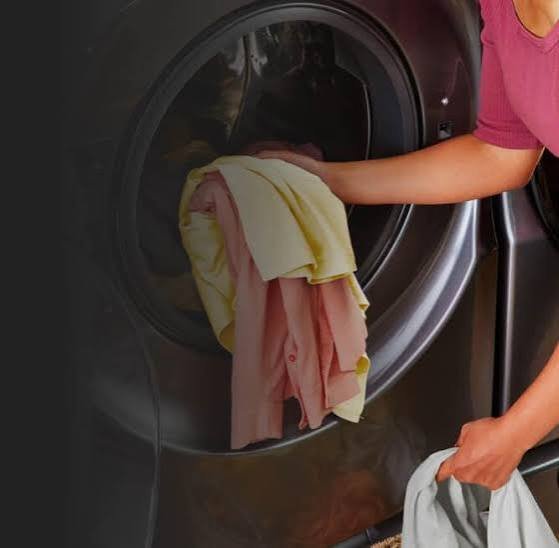
Manufacturer capacity ratings are based on dry weight, not how full the drum looks, which is where most overloading actually happens, a distinction most manufacturer manuals and UAE consumer protection guidance on appliance safety both emphasize for exactly this reason.
| Machine Type | Typical Capacity | Practical Load Guide |
| Compact front-load | 6–7 kg | Roughly 25-30 medium items (shirts, light garments) |
| Standard front-load | 7–9 kg | Roughly 30-35 medium items, or one full bedding set |
| Large-capacity front-load | 9–12 kg | Suitable for bedding, towels, or larger family loads |
| Top-load (agitator) | 6–8 kg | Drum should never be packed above roughly two-thirds full |
| Top-load (impeller/HE) | 8–10 kg | Similar two-thirds guideline, slightly higher tolerance |
The practical test that matters more than any number: a properly loaded front-load drum should still have enough room for a hand to fit comfortably between the laundry and the top of the drum after loading. If the drum is packed tight enough that clothes don’t tumble freely when the drum rotates by hand, it’s overloaded regardless of what the displayed weight might suggest.
The Mechanical Reason Overloading Causes Damage
Overloading isn’t a soft guideline, it’s a mechanical constraint the machine is engineered around. Every washing machine’s motor, suspension, and drum bearing assembly are designed to manage a specific maximum rotational mass. During the spin cycle, an overloaded drum creates a rotational mass beyond what the suspension system is calibrated to stabilize, which transmits excess vibration and lateral force directly into the drum bearings, suspension springs or shock absorbers, and the motor mount.
This is fundamentally different from normal wear. A correctly loaded machine distributes stress within engineered tolerances over its expected lifespan. A machine run overloaded repeatedly is operating outside those tolerances on every cycle, which is why the resulting wear pattern, covered in the next two sections, shows up on specific components rather than as generalized aging.
Five Signs a Load Was Too Heavy
1. The Machine Walks or Shifts During Spin
A correctly loaded, properly leveled machine shouldn’t move from its position during a spin cycle. Visible walking or shifting indicates the suspension system is being pushed beyond its ability to absorb the rotational imbalance an overloaded drum creates.
2. The Spin Cycle Cuts Short or Fails to Reach Full Speed
Many modern machines have a sensor-based safety cutoff that reduces or halts spin speed when it detects an imbalance beyond a safe threshold. A load that consistently triggers this isn’t a machine fault, it’s the machine correctly identifying an overloaded or unbalanced drum.
3. Clothes Come Out Still Visibly Wet or Soapy
An overloaded drum doesn’t have enough free space for water and detergent to circulate through every item, meaning items in the center of a packed load are effectively under-washed and under-rinsed regardless of cycle length or temperature.
4. A New or Worsening Grinding Sound During Spin
This points to bearing or motor mount stress that’s already underway. It’s covered in depth in the spin, drum and motor problems guide, but overloading is one of the most common underlying causes of this exact symptom appearing prematurely
5. Fabric Coming Out More Wrinkled Than Usual
Overloaded fabric has no room to move freely through the wash and spin cycles, so creasing and wrinkling increase noticeably, a low-stakes but reliable indicator that the load exceeded the drum’s usable capacity.
What Overloading Actually Damages, Component by Component
The Suspension System
Springs or shock absorbers (depending on machine design) are engineered to dampen a specific range of rotational force. Repeated overloading fatigues these components faster than their designed service life, leading to the walking and vibration symptoms covered above well ahead of schedule.
The Drum Bearings
Excess rotational stress accelerates bearing wear, the same wear pattern that eventually produces the grinding noise covered in the spin, drum and motor problems guide, but on a significantly shortened timeline when overloading is a regular pattern rather than an occasional event.
The Motor and Drive System
The motor has to work harder to bring an overloaded drum up to spin speed, and belt-driven machines place that additional strain directly on the belt and pulley system, increasing the likelihood of belt wear or slippage over time. If a machine is already showing signs of this kind of strain, a qualified washing machine technician can check the motor and drive components before a belt failure leaves the machine unusable.
The Door Seal and Hinge (Front-Load Machines)
A consistently overpacked drum puts additional outward pressure on the door seal and, over time, added stress on the door hinge and latch mechanism, both of which are engineered for the pressure of a correctly loaded drum, not a consistently overfilled one.
Does Underloading Cause Its Own Problems?
Underloading isn’t mechanically damaging the way overloading is, but it isn’t free of downsides either. A very small load, particularly a single heavy item like one towel or a bath mat, can create its own rotational imbalance during spin, since there isn’t enough surrounding mass to distribute the item’s weight evenly around the drum. This can trigger the same imbalance detection cutoff covered above, not from too much weight, but from an uneven distribution of too little. The practical fix is the same either way, adding one or two extra items generally resolves an underloading imbalance just as effectively as removing items resolves an overloading one.
How to Load a Washing Machine Correctly
Load dry, unfolded items rather than estimating by volume, since tightly folded stacks compress more densely into the drum and create a false impression of available space. Mix larger and smaller items together rather than washing all-large or all small items in the same load, since this naturally distributes weight more evenly around the drum during spin. Use the capacity table above as a starting reference, then apply the hand-space test as the final check before starting the cycle, it’s more reliable in practice than working from a listed weight alone.
FAQs
Does overloading a washing machine void the warranty?
Many manufacturers do specify maximum load capacity in their warranty terms, and damage clearly attributable to consistent overloading, rather than a manufacturing defect, may not be covered. Checking the specific model’s warranty documentation is worth doing if this is a concern.
Can a single overloaded wash cause lasting damage, or does it take repeated overloading?
A single instance is unlikely to cause measurable damage on its own. The wear described in this guide is cumulative, developing from a consistent pattern of overloading rather than an isolated event.
Is it better to run two smaller loads instead of one large one?
For loads that would otherwise exceed the practical capacity guidelines above, yes. The modest increase in water and energy use from an additional cycle is a reasonable trade-off against the accelerated component wear from repeated overloading.
Do front-load and top-load machines have different overloading tolerances?
Front load machines are generally more sensitive to overloading due to their spin speeds and suspension design, while top-load machines have somewhat more tolerance, though both are still subject to the same underlying mechanical stresses at extreme overload levels.
How can someone tell if their specific machine is being overloaded regularly without weighing every load?
The hand-space test covered in this guide, room for a hand between the laundry and the top of the drum after loading, is a reliable practical check that doesn’t require weighing anything.
Does overloading affect energy or water efficiency, not just the machine’s components?
Yes. An overloaded machine often needs longer cycles and sometimes repeat rinses to properly clean an under-circulated load, which increases both water and energy use rather than saving either.