
Why dishwashers fail faster in Dubai is rarely the result of a single catastrophic defect; rather, it is the compounding impact of three relentless environmental factors: high water hardness, elevated ambient kitchen heat, and demanding local usage patterns. Modern appliances engineered to run reliably for ten to twelve years in temperate climates with soft municipal water frequently experience major mechanical breakdowns within just four to six years in the UAE. This accelerated degradation is not a reflection of poor manufacturing or inferior brand quality, but a fundamental engineering mismatch between standard factory calibrations and Dubai’s severe operational environment.
Dubai’s remineralized tap water accelerates limescale precipitation across heating elements, spray arm nozzles, and turbidity sensors with every wash cycle, while elevated ambient kitchen temperatures impose sustained thermal stress on circulation pump motors and electronic control boards (PCBs). When paired with heavy daily household demands, this multi-front mechanical strain leads to seized impellers, blocked internal water paths, and premature electronic failure. This comprehensive guide breaks down the exact chemical and thermal mechanisms behind accelerated dishwasher wear in the region, identifies the internal components most vulnerable to damage, and provides precise, proven maintenance protocols to protect your appliance and maximize its reliable working lifespan in the UAE.
Jump to a section:
- Hard Water Is the Single Biggest Factor
- Heat Affects the Electronics More Than People Expect
- Usage Patterns Push Components Harder Here
- Installation and Ventilation Issues Specific to Dubai Kitchens
- What Actually Slows This Down
Hard Water Is the Single Biggest Factor
How Mineral Buildup Actually Damages a Dishwasher
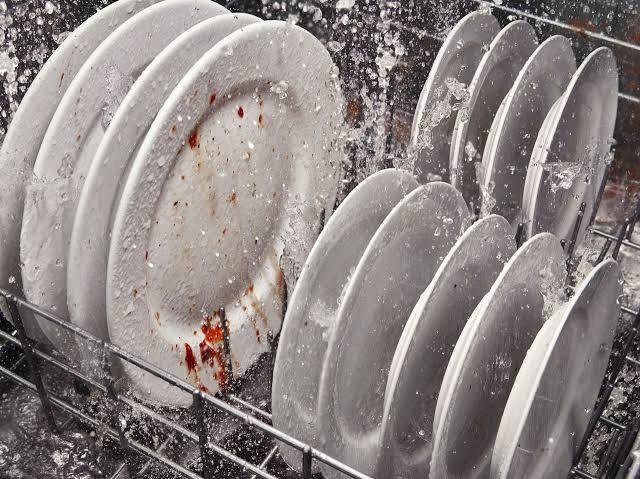
Dubai’s municipal water supply contains added calcium and magnesium for stability, landing in the moderately hard to hard range. Every wash cycle exposes heating elements and internal water lines to mineral precipitation that bakes into solid limescale. To see how mineral density attacks internal heating elements, water valves, and pump impellers.
Why the Heating Element Fails First
The heating element is usually the earliest casualty, since it’s the one component directly heating water on every single cycle. Scale buildup insulates the element from the water around it, forcing it to run hotter internally to compensate, which accelerates wear and eventually causes outright failure.
Why Spray Arms and Filters Follow Close Behind
Mineral deposits also narrow the small holes in the spray arms, reducing water pressure and cleaning performance well before anyone notices an actual fault. This is often mistaken for a “not cleaning properly” issue when the root cause is scale, not a broken pump or motor.
Heat Affects the Electronics More Than People Expect
Kitchen Ambient Temperature Compounds Internal Heat
A dishwasher already generates significant heat internally during a cycle, and Dubai kitchens, particularly ones without strong ventilation or air conditioning reaching the kitchen area, run warmer year-round than the conditions most dishwashers are designed around. This added ambient heat gives control boards and electronic components less opportunity to cool down between cycles.
Why This Shortens Control Board Lifespan
Electronic components, particularly capacitors on the control board, degrade faster when consistently exposed to higher operating temperatures. This is part of why control panel and PCB faults show up disproportionately often in Dubai repair calls compared to milder climates, even on the same make and model of machine.
Usage Patterns Push Components Harder Here
Larger Households Running More Cycles
UAE households, particularly larger families or those with domestic help managing daily kitchen loads, often run dishwashers considerably more frequently than the usage assumptions built into most manufacturer lifespan estimates. More cycles simply means faster accumulation of the wear covered throughout this guide.
Back-to-Back Cycles Without Rest
Running a dishwasher immediately after it finishes, rather than allowing it to fully cool and dry between loads, doesn’t give the heating element and internal components any recovery time. Over months, this contributes to the same accelerated wear pattern as running any appliance without rest periods.
Installation and Ventilation Issues Specific to Dubai Kitchens
Built-In Units With Poor Airflow
Built-in dishwashers installed in tightly enclosed cabinetry, without proper ventilation gaps, trap heat around the unit’s exterior components during and after each cycle. This is a more common issue in Dubai’s kitchen cabinetry designs than in some other markets, and it compounds the ambient heat problem covered above.
Water Line Connections and Hard Water
Connection points, hoses, and inlet valves are continuously exposed to mineral-heavy water. Calcification along internal seals or clogged spray arm nozzles misdirects water pressure and frequently triggers front door leaks. If you notice water pooling on your kitchen floor, follow our troubleshooting steps on how to fix a dishwasher leaking from the door to check your rubber gaskets and spray arms
What Actually Slows This Down
Monthly Descaling Makes the Biggest Difference
Running a dedicated dishwasher descaling treatment monthly, covered in full in a separate guide, is the single most effective habit for protecting the heating element and spray arms from the damage covered above.
Six-Month Professional Servicing
A dishwasher inspection and service visit every six months, rather than the twelve-month interval common in milder climates, catches scale buildup and early electronic wear before either becomes a full failure, mirroring the same climate-adjusted servicing schedule that applies to AC units in Dubai.
Improving Kitchen Ventilation Where Possible
For built-in units, ensuring proper ventilation gaps around the unit during installation, and for any unit, avoiding running it in a consistently hot, poorly ventilated kitchen, measurably reduces the heat-related electronic wear covered earlier, in line with general appliance safety guidance from UAE consumer protection standards on appliance ventilation and installation.
FAQs
How much shorter is a dishwasher’s lifespan in Dubai compared to other climates?
A dishwasher that might run 10-12 years in a milder, softer-water climate often needs a major repair or shows significant wear within 4-6 years in Dubai without a consistent descaling and servicing routine.
Does buying a premium dishwasher brand solve this problem?
Premium brands generally use higher-quality components, but hard water and heat affect every brand’s heating element and electronics to some degree. Maintenance consistency matters as much as brand tier.
Is it worth installing a water softener just for the dishwasher?
For a single appliance, an in-line water softener specifically for the dishwasher’s supply line is a smaller, more targeted investment than a whole-home system, and can meaningfully reduce scale-related wear.
Does this affect built-in and freestanding dishwashers equally?
Hard water affects both equally, since it’s a water-supply issue rather than an installation-type issue. Built-in units face the additional ventilation-related heat issue covered in this guide, which freestanding units are less prone to.
Can descaling reverse damage that’s already happened?
Descaling prevents further buildup and can improve performance if caught early, but a heating element or spray arm with heavy, long-term scale damage may already need replacement rather than descaling alone.
Pingback: Dishwasher Leaking From the Door:Fix Guide
Pingback: Repair vs Replace Your Dishwasher: Easy Proven Guide
Pingback: Descale a Dishwasher in Dubai: Proven Hard Water Fix Guide