
A washing machine smell in Dubai is one of the most common complaints homeowners deal with, and it almost always traces back to trapped moisture, detergent residue, or a drainage issue rather than anything actually wrong with the machine’s ability to wash. Front-load machines in particular are prone to this, since their door seal design traps moisture in a way top-load machines generally don’t.
The type of smell is a useful clue in itself. A musty smell usually points to mold in the door seal or drum, a sewage smell points to the drain system, and a sour smell often points to detergent buildup. This guide breaks down each smell separately, what’s actually causing it, and how to clear it for good rather than just masking it.
Jump to a section:
- Why Does a Front-Load Washing Machine Smell Musty?
- Why Does a Washing Machine Smell Like Sewage?
- Why Does a Washing Machine Smell Sour or Like Mildew?
- Why Do Clothes Smell Bad Even After Washing?
- Does Hard Water Make the Smell Worse in Dubai?
- Preventing the Smell From Coming Back
Why Does a Front-Load Washing Machine Smell Musty?
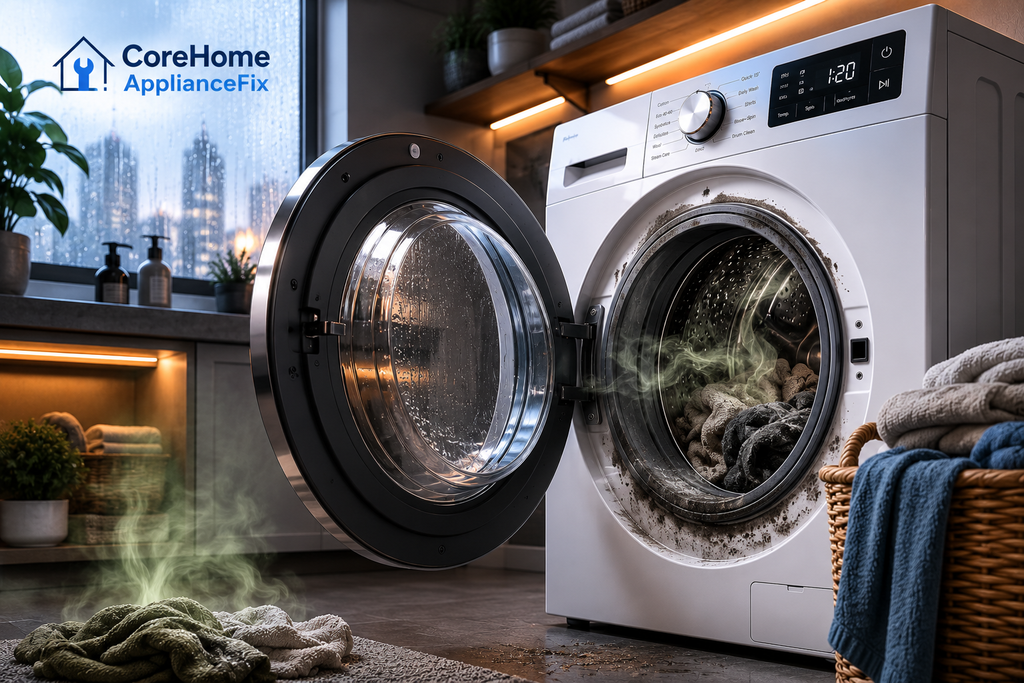
A musty odor is by far the most common washing machine complaint, rooted in a fundamental design reality: front-load washers require an airtight seal to prevent water leaks, but that exact same design traps stagnant moisture, heat, and organic debris inside a dark environment where mold thrives.
The Door Seal (Gasket)
What to look for: Black or dark slimy spots buried inside the rubber folds along the lower perimeter of the door, accompanied by pools of stagnant water, trapped hair, and lint.
The rubber gasket contains deep drainage folds engineered to catch stray water, but they also collect soapy residue, dead skin cells, and fabric fibers after every single cycle. When the door remains shut between laundry days, this trapped moisture cannot evaporate. Fungal colonies quickly establish deep inside the rubber channels, where they remain completely invisible until you physically pull the seal back.
The fix: Peel back the rubber folds and scrub away active mold using an old nylon toothbrush dipped in a solution of warm water and distilled white vinegar. Wipe the entire gasket bone-dry with a clean cloth after your last load of the day, and leave the washer door cracked open two to three inches between cycles to maintain continuous airflow and stop spores from returning.
The Detergent Drawer
What to look for: Caked detergent crust, jelly-like residue coating the softener compartment, or black mildew speckling the underside and ceiling of the drawer housing.
Thick liquid detergents and concentrated fabric softeners rarely flush out entirely during normal rinse cycles. Leftover chemicals sit inside the dispenser tray, fermenting into a slimy biofilm that emits a sharp, sour-mildew stench every time incoming water flushes through the compartment.
The fix: Press the internal release latch to slide the entire drawer completely out of the machine frame. Soak the tray in hot water, scrub every siphon channel and corner with a stiff brush until all residue dissolves, wipe out the dark ceiling cavity inside the machine housing, and reinstall the drawer once it is completely dry. Performing this check once a month stops chemical sludge from accumulating.
The Drum Itself
What to look for: A persistent, damp odor radiating directly from the wash chamber, even when the rubber door seal and soap drawer are completely clean.
Frequent low-temperature wash cycles fail to dissolve body oils, skin cells, and soap binders. This organic slurry glues itself to the inaccessible outer surface of the stainless steel drum and the surrounding plastic wash tub, forming a self-sustaining bacterial biofilm that surface-level wiping will never touch.
The fix: Run an empty maintenance cycle on the hottest temperature setting available, ideally ninety degrees Celsius, using a dedicated washing machine cleaner tablet or two full cups of distilled white vinegar. The sustained high thermal load dissolves the hidden chemical film and sterilizes the internal mechanics. Running this hot flush monthly, alongside daily door-seal drying, permanently eliminates the odor at its source.
Why Does a Washing Machine Smell Like Sewage?
A sewage smell is more alarming than a musty one, but it’s usually not as serious as it sounds, since it almost always comes down to the drain system rather than anything actually wrong with the machine’s plumbing connection to the building.
Blocked Drain Filter
Lint, coins, hair, and soap scum collect in the drain filter over time. Once choked, stagnant water trapped behind the pump begins to decompose and emit a sewage smell. If clearing the filter doesn’t restore smooth drainage, consult our troubleshooting guide on washing machine draining, filling, and leaking problems in Dubai to check for internal hose blockages.
P-Trap or Drain Hose Seal
Similar to a sink, if the drain setup allows sewer gas to travel back up when the machine sits idle, particularly after several days of non-use, running a normal wash cycle usually clears it immediately, since the water flow resets the seal. If the smell returns every time the machine sits unused for a few days, Dubai’s washing machine repair specialists can confirm whether the drain hose or trap itself needs attention, rather than repeatedly running cycles to mask it.
Buildup Inside the Drain Hose
Over months and years, the inside of the drain hose can accumulate the same grime that builds up in the drum, separate from whatever collects in the filter. A hot wash with a washing machine cleaner, run through the full drain cycle, usually clears mild cases, while a persistent smell despite a clean filter points to needing the hose itself inspected or replaced.
Why Does a Washing Machine Smell Sour or Like Mildew?
A sour smell is different from a musty one, sharper and more acidic rather than damp and earthy, and it usually points to bacteria growing in leftover moisture rather than mold specifically.
Leftover Water in the Drum
Water that remains standing in the drum after a cycle gives odor-causing bacteria the damp environment they need to multiply. If your washer is failing to pump out wastewater completely and pauses before the final spin, read our diagnostic guide on why a washing machine stops mid-cycle to inspect water level sensors and drain timers.
Detergent Buildup Over Time
Using more detergent than a load actually needs is one of the most common causes of a sour smell, since the excess doesn’t fully rinse away and instead builds up as a residue that turns sour over repeated washes. Switching to the amount recommended for the machine’s load size, rather than a heavier pour out of habit, prevents this from accumulating.
A Wash Cycle That’s Too Cold
Cold washes are gentler on clothes and cheaper to run, but they don’t get hot enough to kill the bacteria that cause sour smells, especially with heavily soiled loads. Running an occasional hot wash, even just once every couple of weeks, resets this and clears bacteria that colder cycles leave behind.
Why Do Clothes Smell Bad Even After Washing?
This is one of the most frustrating versions of the problem, since the machine itself might be completely clean, and the smell is actually transferring onto the clothes rather than coming from the machine.
The Machine Is Clean, But the Clothes Still Pick Up Odor
If the drum, seal, and drawer have all been cleaned and the smell persists specifically on washed clothes, the cause is usually clothes sitting damp inside the drum for too long after the cycle ends, even in an otherwise clean machine. Removing laundry within 30 minutes to an hour of the cycle finishing prevents this.
Overloading the Machine
Packing the drum too full prevents water and detergent from properly circulating through every item, leaving some clothes under-rinsed and holding onto a stale, unwashed smell even after a full cycle. Washing slightly smaller loads, particularly for heavily soiled items, solves this without needing any repair or deep clean.
Not Enough Detergent for Heavily Soiled Loads
The opposite problem also happens: using too little detergent for a heavily soiled or sweat-heavy load means it isn’t actually broken down and rinsed away, so it stays on the fabric rather than in the wash water. Matching detergent amounts to both load size and soil level, rather than always using the same measure regardless of how dirty the load is, resolves this.
Does Hard Water Make the Smell Worse in Dubai?
Dubai’s water supply runs harder than many homeowners realize, and hard water genuinely makes every cause covered so far worse, rather than being a separate issue on its own.
Mineral Buildup Reduces Detergent Effectiveness
Hard water reacts with detergent before it ever reaches the clothes, reducing how effectively it can break down dirt, oils, and bacteria, a known characteristic of Dubai’s municipal water supply that affects appliances beyond just washing machines.
Mineral Deposits Build Up Inside the Machine
Over time, hard water leaves mineral deposits inside the drum, along hoses, and inside the detergent drawer, creating extra surface area for bacteria and mold to cling to that a machine running on softer water wouldn’t have. This is part of why the same cleaning routine sometimes needs to happen more often here than the general advice for milder water regions suggests.
What Helps in Hard Water Areas Specifically
Running a monthly hot wash with a dedicated washing machine cleaner, rather than vinegar alone, helps break down mineral buildup as well as bacteria and mold. Using slightly more detergent than the minimum recommended amount, within reason, also helps counteract hard water’s effect on how well detergent actually works.
Preventing the Smell From Coming Back
Every cause covered in this guide shares a common thread: trapped moisture and leftover residue. A handful of consistent habits prevent nearly all of them at once, rather than needing a different fix for each individual cause.
Leave the Door Open Between Washes
This single habit prevents more musty and sour smells than almost anything else on this list, since it removes the damp, closed environment mold and bacteria both need to grow.
Wipe the Seal Dry After Each Wash
A quick wipe takes seconds and stops moisture from sitting in the folds long enough to become a problem, rather than needing a deep clean later once mold has already set in.
Run a Monthly Hot Wash
An empty hot wash with a washing machine cleaner, or vinegar as a lighter alternative, resets the drum, hose, and drain system all at once, clearing out whatever has started to build up before it becomes noticeable.
Match Detergent to Load Size and Soil Level
Using the correct amount, not automatically more or less, prevents both residue buildup from overuse and lingering odor from underuse, and matters more in Dubai’s hard water than it would elsewhere.
Clean the Detergent Drawer Monthly
This is the part of the machine most often forgotten entirely, and it’s one of the most common sources of a persistent smell that survives even a full drum clean.
FAQs
How often should a washing machine be deep cleaned to prevent smells?
Once a month is generally enough for most households, though machines used daily or in hard water areas may benefit from every two to three weeks instead.
Is it safe to use bleach to remove washing machine smells?
Diluted bleach can be used occasionally for stubborn mold in the drum, but it shouldn’t replace regular vinegar or washing machine cleaner use, and it should never be mixed with vinegar in the same wash.
Does leaving wet clothes in the machine cause a bad smell?
Yes, this is one of the most common causes. Clothes left damp inside a closed drum for more than an hour or two after a cycle ends often develop a sour smell even if the machine itself is clean.
Can a bad smell from the washing machine mean something is broken?
Not usually. Most smells come down to moisture, residue, or drainage buildup rather than an actual mechanical fault, though a sewage smell that persists after cleaning the filter is worth having checked.
Do front-load machines always smell worse than top-load machines?
They’re more prone to it due to the door seal design, but with consistent habits like leaving the door open and wiping the seal, a front-load machine can stay just as smell-free as a top-load one.
Does using less detergent actually help prevent smells?
It depends on the load. Too much detergent leaves residue behind, but too little means heavily soiled loads don’t get properly rinsed. The right amount, matched to load size and soil level, is what actually prevents smell.