
Hard water washing machine damage is a silent, cumulative threat to your laundry appliances. Calcium and magnesium minerals bond to internal metal and plastic surfaces with every single cycle, coating hidden mechanics in thick limescale long before visible warning signs appear. Because this buildup happens out of sight, most homeowners only realize there is a problem when heating elements burn out, drain pumps seize, or the drum spider bracket snaps.
In Dubai, where the municipal water supply carries a high mineral profile, hard water wear is an unavoidable reality for every household appliance, not just older or neglected machines. This guide breaks down exactly which internal components suffer the most from mineral scaling, how that calcification destroys parts at a mechanical level, and the precise maintenance steps needed to protect your machine from premature failure.
Jump to a section:
- What Is Hard Water, and Is Dubai’s Water Actually Hard?
- How Hard Water Damages the Heating Element
- How Hard Water Affects the Drum and Inlet Valve
- How Hard Water Reduces Detergent Effectiveness
- Signs Hard Water Is Already Damaging a Machine
- How to Protect a Washing Machine From Hard Water
What Is Hard Water, and Is Dubai’s Water Actually Hard?
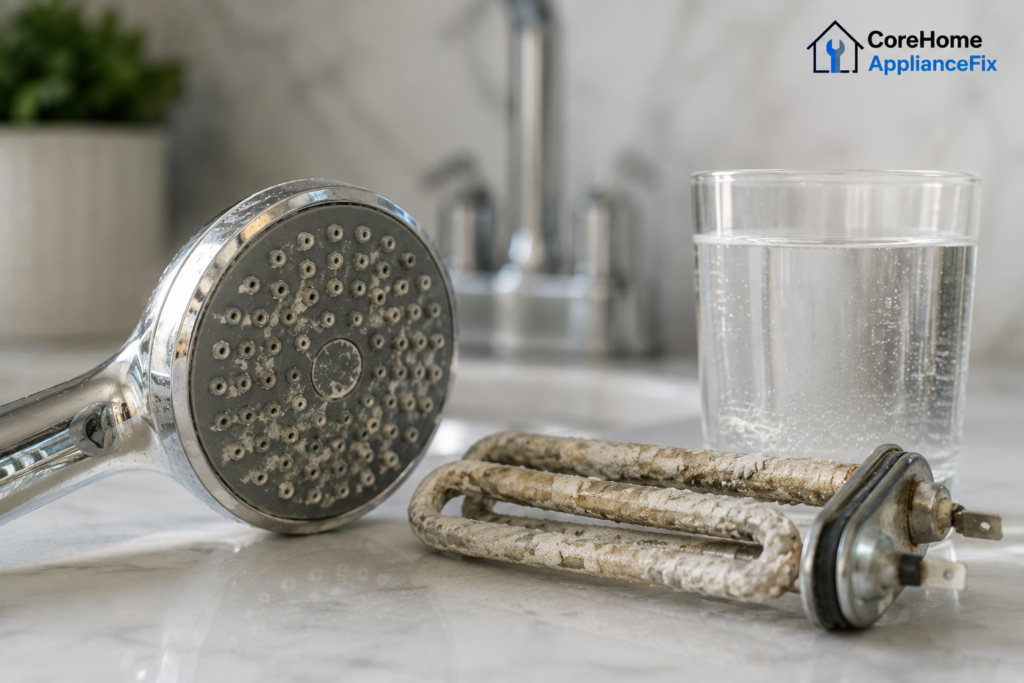
Hard water contains elevated concentrations of dissolved minerals, primarily calcium and magnesium. While completely safe for daily use, these dissolved minerals do not remain liquid under heat and pressure; they crystallize into a rock-hard chalky crust known as limescale across every internal surface they touch.
Why Dubai’s Water Carries Minerals
Dubai’s water starts as desalinated seawater, essentially mineral-free at that stage, but minerals like calcium and magnesium are deliberately added back in during treatment for stability, a process DEWA outlines as part of its water treatment standards, before it reaches homes.
Why This Matters for Appliances Specifically
A mineral level that feels mild during a quick shower becomes destructive inside an enclosed appliance. Heat acts as an aggressive chemical catalyst: every time your washing machine warms water for a cycle, dissolved calcium carbonate rapidly precipitates out of liquid solution and bakes directly onto metal components. This thermal reaction is why heating elements, drum spiders, and internal pump seals suffer severe limescale accumulation long before standard household plumbing shows any symptoms.
How Hard Water Damages the Heating Element
The heating element is usually the first component to show real hard water damage, since it’s the one part of the machine directly heating water to high temperatures on a regular basis.
How Scale Actually Forms
Every time the heating element heats water, dissolved calcium and magnesium come out of solution and settle onto the element’s surface as solid limescale, the same white, chalky deposit visible on a kettle’s heating coil. Unlike dust or dirt, this scale bonds to the metal and doesn’t rinse away with normal use.
Why This Reduces Efficiency First
A scaled heating element has to work harder to transfer the same amount of heat into the water, since the layer of scale acts as insulation between the element and the water around it. This shows up as longer wash cycles and higher energy use well before it shows up as an outright fault, often going unnoticed for months.
How It Eventually Causes Failure
As scale builds up further, the element has to run hotter internally to compensate, which accelerates wear and significantly shortens its lifespan. Eventually, a heavily scaled element cracks or develops an internal short circuit that cuts power to your home. If your appliance is shutting off during hot wash cycles, read our guide on why a washing machine trips the power to diagnose heating element and electrical faults.
What Slows This Down
Running a monthly hot cycle with a descaling product formulated for washing machines prevents scale from building up to damaging levels. Once an element is already heavily scaled, descaling treatments have limited effect, since the buildup has typically bonded too firmly to fully dissolve.
How Hard Water Affects the Drum and Inlet Valve
Beyond the heating element, hard water affects two other components in very different ways, one through gradual mineral coating, the other through a small but critical mechanical part.
Mineral Buildup Inside the Drum
Limescale doesn’t only form on heating elements, it also builds up gradually on the inside of the drum itself, particularly in the small holes and crevices where water passes through during a cycle. Over time, this buildup can leave clothes feeling stiff or scratchy even when using a normal detergent amount, since the mineral layer interferes with how thoroughly water and detergent reach the fabric.
Why the Inlet Valve Is Especially Vulnerable
The inlet valve controls water intake through narrow internal channels where mineral sediment quickly accumulates and chokes flow. If your washer is struggling to take in water or is taking an unusually long time to start a cycle, read our diagnostic guide on washing machine filling and draining problems to inspect solenoids and mesh filters.
Why This Component Usually Needs Full Replacement
Unlike a heating element, which can sometimes be descaled if caught early, an inlet valve’s internal components are sealed, so once mineral buildup affects its function, replacement is typically the only real fix rather than a cleaning or repair.
What Slows Both of These Down
Keeping the inlet valve’s small mesh filter clean, most machines have one at the connection point, catching sediment before it reaches the valve’s internal mechanism. For the drum, the same monthly hot wash and descaling routine used for the heating element also helps limit buildup here, since both problems come from the same underlying mineral source.
How Hard Water Reduces Detergent Effectiveness
Hard water triggers a chemical reaction that weakens your detergent, leaving laundry dull and stiff while coating the inside of your machine with stubborn residue.
Why Detergent Doesn’t Fully Activate
Detergent uses active surfactants to break down body oils and dirt. In hard water, dissolved calcium and magnesium bind with these cleaning agents immediately, neutralizing them before they ever reach the fabric. A standard amount of detergent that works fine in soft water loses a large portion of its cleaning power here, leaving clothes only partially sanitized.
The Soap Scum Connection
When minerals bond with detergent, they form an insoluble residue called soap curd. Instead of rinsing cleanly down the drain, this chalky film embeds deep into fabric weaves. Over time, it turns white dingy, dulls bright colors, and makes towels feel rough, scratchy, and non-absorbent.
Why This Isn’t Just a Cleaning Problem
That same soap curd coats the hidden outer drum, spider bracket, and internal drain hoses. This sticky layer traps lint, hair, and organic debris, creating the primary fuel source for bacteria and musty odors inside the machine. Reduced cleaning power and bad washer smells are the exact same chemical problem showing up in different places.
What Helps Detergent Work Properly in Hard Water
Switch to concentrated liquid detergents, which dissolve and perform much better in mineral-rich water than powders. Slightly increasing your dose within the manufacturer’s recommended limits offsets the minerals, while adding a dedicated laundry water-softening booster neutralizes calcium on contact so your detergent can clean at full capacity.
Signs Hard Water Is Already Damaging a Machine
Hard water damage builds gradually, which means most of these signs show up well before an actual breakdown, giving a real window to intervene before a full repair becomes necessary.
Visible White or Chalky Residue
A white, crusty buildup around the detergent drawer, door seal, or drum opening is the most direct visible sign of mineral scale forming inside the machine, and it’s usually the earliest one to notice.
Longer Wash and Heating Times
A machine that’s started taking noticeably longer to complete a cycle, particularly the heating stage, is often dealing with a scaled heating element working harder to reach the same temperature.
Clothes Feeling Stiff or Rough After Washing
This points to either mineral buildup on the drum interface or the soap scum residue covered in the detergent section, both of which stem from the same hard water source.
Rising Energy Bills Without a Change in Usage
A scaled heating element uses more energy to do the same job, so a gradual bill increase with no real change in how often the machine runs can be an early hard water signal rather than an obvious fault.
Inconsistent or Slow Filling
A machine that fills more slowly than it used to, or fills unevenly, often points to sediment building up inside the inlet valve’s narrow opening.
Any one of these on its own isn’t necessarily urgent, but two or more appearing together is a strong signal that scale has already built up to a meaningful level, and it’s worth starting a regular descaling routine before any of these progress into an actual component failure.
How to Protect a Washing Machine From Hard Water
None of the damage covered in this guide is inevitable. A few consistent habits meaningfully slow down, and in some cases largely prevent, the wear of hard water over a machine’s lifespan.
Run a Monthly Descaling Cycle
An empty hot wash using a descaling product made specifically for washing machines, not a general household descaler, is the single most effective habit for limiting scale buildup on the heating element and inside the drum before it becomes damaging.
Clean the Inlet Filter Regularly
Most machines have a small mesh filter at the water connection point, and checking it every few months for sediment buildup catches the inlet valve’s most common failure point before it fully clogs.
Consider a Water Softener for the Whole Home
For households finding hard water to be an ongoing, significant issue, not just for the washing machine but across other appliances too, a whole-home water softening system addresses the root cause rather than managing the symptoms appliance by appliance. This is a bigger investment, but it’s worth considering for anyone dealing with heavy scale buildup repeatedly.
Use the Right Detergent Amount for Hard Water
Slightly increasing detergent within the manufacturer’s recommended range, rather than using the standard amount meant for average water hardness, helps offset how much gets used up reacting with minerals before reaching the fabric.
Schedule Regular Professional Servicing
A washing machine technician can catch early-stage scale buildup on the heating element or inlet valve during a routine service, often before it’s visible or affecting performance, which is meaningfully cheaper than addressing it after a component has already failed.
FAQs
How quickly does hard water actually damage a washing machine in Dubai?
It varies by machine and usage, but noticeable effects like longer cycle times or visible scale can appear within 1 to 2 years of regular use without any descaling routine, sooner in machines run daily.
Can hard water damage void a washing machine’s warranty?
Some manufacturers specify water hardness limits in their warranty terms, so it’s worth checking the specific machine’s documentation, since damage attributed to mineral buildup rather than a manufacturing fault isn’t always covered.
Is bottled or filtered water worth using for laundry in hard water areas?
Not practically or necessary for most households. Descaling routines and inlet filter maintenance address the same problem far more cost-effectively than sourcing alternative water for laundry.
Does every washing machine brand handle hard water equally poorly?
No. Some machines include built-in descaling cycles or water softening features designed specifically for hard water regions, which can meaningfully reduce the maintenance needed compared to standard models.
Can a heavily scaled heating element be cleaned instead of replaced?
Sometimes, if caught early with a strong descaling treatment, a heavily bonded scale often can’t be fully removed, at which point replacement becomes the more reliable option.
Does a water softener eliminate the need for regular machine maintenance?
It significantly reduces the mineral load reaching the machine, but regular cleaning and maintenance are still worthwhile, since detergent residue and moisture-related issues are separate from hard water damage specifically.