
A refrigerator that stops cooling properly rarely fails all at once. Sometimes only the freezer loses temperature, sometimes only the fridge compartment warms up while the freezer stays fine, and sometimes both sides fail together. These symptoms can look different but often trace back to the same handful of components: the evaporator coils, condenser coils, compressor, thermistor, or defrost system.
A refrigerator maintains temperature through a closed cooling cycle involving the compressor, condenser coils, evaporator coils, and a thermistor that reports temperature to the control board. If any one of these parts fails, or if airflow between the fridge and freezer compartments is blocked, cooling performance drops in the compartment that depends on it.
The guide below covers the most common fridge and freezer cooling problems, how to identify which one you’re dealing with, practical fixes, and what to consider before booking a repair in Dubai.
Jump to section:
- What Causes Fridge and Freezer Cooling Problems?
- Why Is the Fridge Not Cooling?
- Why Is the Freezer Not Freezing?
- Why Is the Fridge Cooling But Freezer Not?
- Why Is the Freezer Not Cold Enough?
- Can a Fridge or Freezer Cooling Problem Be Repaired?
- How to Prevent Fridge and Freezer Cooling Problems
- How Much Does Fridge and Freezer Repair Cost in Dubai?
- When Should You Repair or Replace a Refrigerator?
What Causes Fridge and Freezer Cooling Problems?
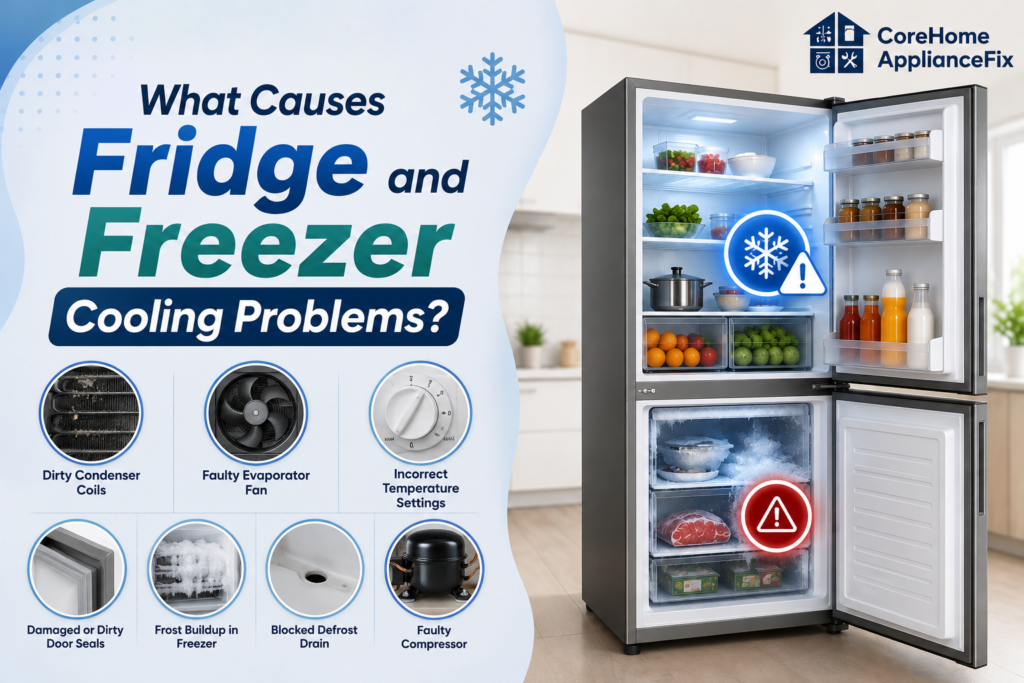
A refrigerator’s cooling cycle depends on several components working together: the compressor circulates refrigerant, the condenser coils release heat, the evaporator coils absorb heat from inside the appliance, and the thermistor and control board regulate temperature. A shared air duct usually carries cold air from the freezer into the fridge compartment, which is why a single fault can affect one or both sides differently.
The most common causes include:
- Frost build-up on the evaporator coils
- Dirty or blocked condenser coils
- Faulty condenser fan or evaporator fan
- Failed defrost system (timer, thermostat, or heater)
- Damaged door gasket
- Faulty thermistor or temperature sensor
- Blocked air vent between freezer and fridge compartments
- Low refrigerant or a refrigerant leak
- Failing compressor
- Overloading or blocking vents with food items
Many of these faults produce overlapping symptoms, which is why identifying exactly which compartment is affected, and when the problem started, matters more than the general complaint of “not cooling.”
Why Is the Fridge Not Cooling?
A fridge compartment usually stops cooling when the evaporator coils are covered in frost, the condenser coils are clogged with dust, the door gasket is no longer sealing, or the air vent from the freezer is blocked. In Dubai’s climate, dust build-up on the condenser coils and warm ambient kitchen temperatures make this fault more common than in cooler regions.
How to Check
Check whether the freezer compartment is still cold. If the freezer is working normally but the fridge isn’t, the shared air vent or damper between the compartments may be blocked with food or ice. Inspect the door gasket for gaps, tears, or a weak seal by closing it on a piece of paper and checking if it slides out easily. Pull the unit out (after unplugging it) to inspect the condenser coils at the back or underneath for dust and lint build-up.
If you also notice water pooling under the vegetable crisper drawers or leaking onto the floor while cooling is weak, read our troubleshooting guide on why a fridge or freezer leaks water to check for a frozen defrost drain line.
Solution
Clean the condenser coils with a vacuum and coil brush, clear any obstruction from the air vent, and replace a damaged door gasket. If the fridge still doesn’t cool after these checks while the freezer works normally, the fault is likely a failing evaporator fan, blocked vent inside the fridge, or a thermistor reading incorrectly. . At this stage, it’s best to consult a fridge repair experts in Dubai, who can pinpoint the exact fault and restore proper cooling.”
Why Is the Freezer Not Freezing?
A freezer that isn’t reaching temperature is commonly caused by heavy frost build-up on the evaporator coils, a failed defrost system, a faulty evaporator fan, or a refrigerant leak. Frost build-up is usually a symptom of a defrost component failure rather than the root cause itself.
How to Check
Open the freezer and look for visible frost or ice on the inside walls, ceiling, or around the back panel. Listen for the evaporator fan running when the door is closed. If there’s heavy frost but the fan sounds normal, the defrost timer, defrost thermostat, or defrost heater is the likely cause.
Related Reading: Heavy frost is one of the most common freezer symptoms — see our guide on Why Is Frost and Ice Building up in a Freezer?
Solution
If frost build-up is present, the self-defrost system needs inspection since components like the defrost timer and defrost thermostat aren’t user-serviceable and require correct diagnosis before replacement. Clearing occasional light frost manually can offer temporary relief, but it will return if the underlying defrost fault isn’t fixed. Suspected refrigerant leaks or compressor faults should always be handled by the freezer repair specialists in Dubai, since refrigerant handling requires certification in most cases.
Why Is the Fridge Cooling But Freezer Not?
This pattern typically points to a fault isolated to the freezer side of the system, such as a failed evaporator fan, a defrost system malfunction limited to the freezer coils, or a blocked freezer vent, while the fridge compartment continues to receive some residual cooling from the shared system.
How to Check
Confirm the freezer temperature reading against the actual condition of frozen goods, since display errors can occur if the thermistor is faulty. Check for unusual noises, since a silent evaporator fan when the door is closed is a strong indicator of fan failure. Inspect for frost concentrated specifically in the freezer compartment.
Solution
If the evaporator fan has failed, it will need replacement, and this typically requires opening the freezer’s inner panel, which is best left to a professional. If frost is heavy and localized to the freezer, the defrost system likely needs repair. A qualified technician can confirm whether the fault lies in the fan, defrost components, or thermistor before replacing parts.
Why Is the Freezer Not Cold Enough?
A freezer that’s running but not reaching its set temperature is often a sign of a partial fault rather than a complete failure, such as a weakening compressor, a door gasket not sealing fully, overloading that restricts airflow, or a condenser fan running slower than it should.
How to Check
Check the door seal completely around all edges, not just one side, as gaskets often fail unevenly. Make sure food items aren’t blocking the internal air vents or overstuffed against the back wall where the evaporator coils are located. Confirm the condenser fan (usually located near the compressor at the back or bottom of the unit) is spinning at full speed and isn’t obstructed.
Solution
Redistribute freezer contents to restore proper airflow and replace a worn door gasket if it’s no longer sealing. If the condenser fan is running slowly or making noise, it may need replacement. If the freezer still underperforms after these checks, a weakening compressor or low refrigerant level should be diagnosed by a technician, since both require specialized tools to confirm.
Can a Fridge or Freezer Cooling Problem Be Repaired?
Yes. Most fridge and freezer cooling issues can be repaired once the fault is correctly diagnosed. Problems such as dirty condenser coils, damaged door gaskets, blocked vents, faulty fans, and defrost system components are commonly repaired without replacing the appliance.
More significant issues involving the compressor or a refrigerant leak may cost more to repair, but this is still often more economical than replacing the unit, particularly if the refrigerator is otherwise in good condition. Refrigerant handling is regulated under the UAE’s Ministerial Decree on the Regulation of Hydrofluorocarbons, which is why leaks should always be diagnosed and repaired by a certified technician rather than attempted independently.
As with washing machines, the exact repair depends on the diagnosis rather than the symptom alone. Two refrigerators with the same complaint, such as “fridge not cooling,” can have entirely different underlying faults.
How to Prevent Fridge and Freezer Cooling Problems
Simple maintenance includes:
- Clean the condenser coils every few months, especially in dusty environments.
- Check the door gasket periodically for gaps or wear.
- Avoid overloading the fridge or freezer, which restricts airflow.
- Keep food away from air vents inside both compartments.
- Allow hot food to cool before placing it inside the refrigerator.
- Make sure the unit has clearance around the back and sides for proper ventilation.
- Check that the temperature settings match manufacturer recommendations.
Regular maintenance reduces strain on the compressor and defrost system, both of which are among the more costly components to repair.
How Much Does Fridge and Freezer Repair Cost in Dubai?
Most fridge and freezer repairs in Dubai cost between AED 150 and AED 1,500+, depending on the fault and the parts involved. Simple repairs, such as cleaning condenser coils or replacing a door gasket, sit at the lower end. Repairs involving the compressor, refrigerant, or control board cost more due to specialized labor and parts.
Estimated Repair Costs
- Basic repairs (coil cleaning, gasket replacement): AED 150–350
- Component replacements (fan, thermistor, defrost timer): AED 250–600
- Major repairs (compressor, refrigerant leak, control board): AED 500–1,500+
Keep in mind: the same symptom doesn’t always mean the same repair. A fridge that’s not cooling might only need a blocked vent cleared, while another with the identical complaint could need a new evaporator fan or a refrigerant recharge. An accurate diagnosis ensures the repair cost reflects the actual fault rather than the visible symptom.
When Should You Repair or Replace a Refrigerator?
Repairing a fridge or freezer is usually worthwhile when the appliance is relatively new, the fault is limited to one component, and the repair cost is reasonable compared with replacement.
Repair is often a practical choice when the issue involves:
- Dirty condenser coils
- Damaged door gasket
- Faulty evaporator or condenser fan
- Defrost system components
- Blocked air vents
Replacement may be worth considering when the unit has a failing compressor, a persistent refrigerant leak, or multiple failing components at once, particularly on an older refrigerator where repair costs start to approach the price of a new unit. For a deeper breakdown of costs, service life, and when replacement makes more sense, check out our complete guide on when to repair or replace your refrigerator.
Frequently Asked Questions
Why is the fridge warm but the freezer is working fine?
This usually points to a blocked air vent between the compartments, a failing evaporator fan, or a damaged door gasket on the fridge side. The freezer can continue cooling normally even if the fridge compartment isn’t receiving cold air.
Why does the freezer have frost but isn’t cold?
Heavy frost build-up combined with poor cooling almost always points to a failed defrost system component, such as the defrost timer, defrost thermostat, or defrost heater, rather than the compressor.
Can low refrigerant cause a fridge to stop cooling?
Yes. Low refrigerant, usually from a slow leak, reduces the system’s ability to absorb and release heat, leading to weak or absent cooling in one or both compartments. This requires a licensed technician to diagnose and recharge.
Is it normal for one side of a fridge-freezer to fail before the other?
Yes. Since cold air is usually shared between compartments through a vent and fan system, a fault isolated to one side, such as a blocked vent or a failed fan, can affect one compartment while the other continues working.
How long can food stay fresh if the fridge stops cooling?
Perishable food is generally considered safe for around 4 hours in a fridge that has stopped cooling, provided the door stays closed. Frozen food in a freezer that has lost power typically stays safe longer, often up to 24–48 hours if the freezer remains full and unopened.
Can I clean the condenser coils myself?
Yes, cleaning condenser coils is a safe DIY task. Unplug the unit, pull it away from the wall, and use a vacuum or coil brush to remove dust and lint from the coils and fan area.
Is it safe to keep using a fridge that’s not cooling properly?
Continuing to use a fridge that isn’t cooling can lead to food spoilage and puts additional strain on the compressor if the underlying fault isn’t addressed. It’s best to diagnose and repair the issue rather than let it run indefinitely.
Conclusion
A fridge not cooling, a freezer not freezing, or cooling that’s inconsistent between compartments usually points to a specific, identifiable fault, whether that’s a blocked vent, a failed fan, a defrost system issue, or something more involved like a refrigerant leak or weakening compressor.
Simple checks such as inspecting the door gasket, clearing blocked vents, and cleaning condenser coils can resolve some cases. However, persistent cooling problems, especially with visible frost or noticeable temperature swings, usually indicate a component that needs professional diagnosis.
Understanding which compartment is affected and when the problem started helps avoid unnecessary part replacement and gets the refrigerator back to reliable cooling faster. For ongoing cooling issues, proper diagnosis is the best way to restore performance and protect the rest of the appliance from further strain.