
A washing machine that repeatedly trips the power or displays electrical errors can quickly disrupt daily household routines. These issues are often linked to faulty electrical components, damaged wiring, a defective motor, or problems with the home’s electrical circuit. In many cases, the appliance gives warning signs before the fault becomes more serious.
Understanding the cause of an electrical problem helps prevent unnecessary part replacements and reduces the risk of further damage. Some issues can be identified through simple visual checks, while others require professional diagnosis using specialised testing equipment. The guide below explains the most common washing machine electrical problems, how to check them safely, possible repair solutions, and what to expect when arranging repairs in Dubai.
Jump to section:
- Why Is My Washing Machine Tripping the Power?
- Why Is My Washing Machine Showing an Electrical Error Code?
- Why Is My Washing Machine Motor Not Working?
- Can a Washing Machine Motor Be Repaired?
- What Causes Electrical Faults in a Washing Machine?
- How Much Does Washing Machine Electrical Repair Cost in Dubai?
- How Much Does Washing Machine Repair Cost in Dubai?
- Helpful Maintenance Tip
- FAQs
Why Is My Washing Machine Tripping the Power?
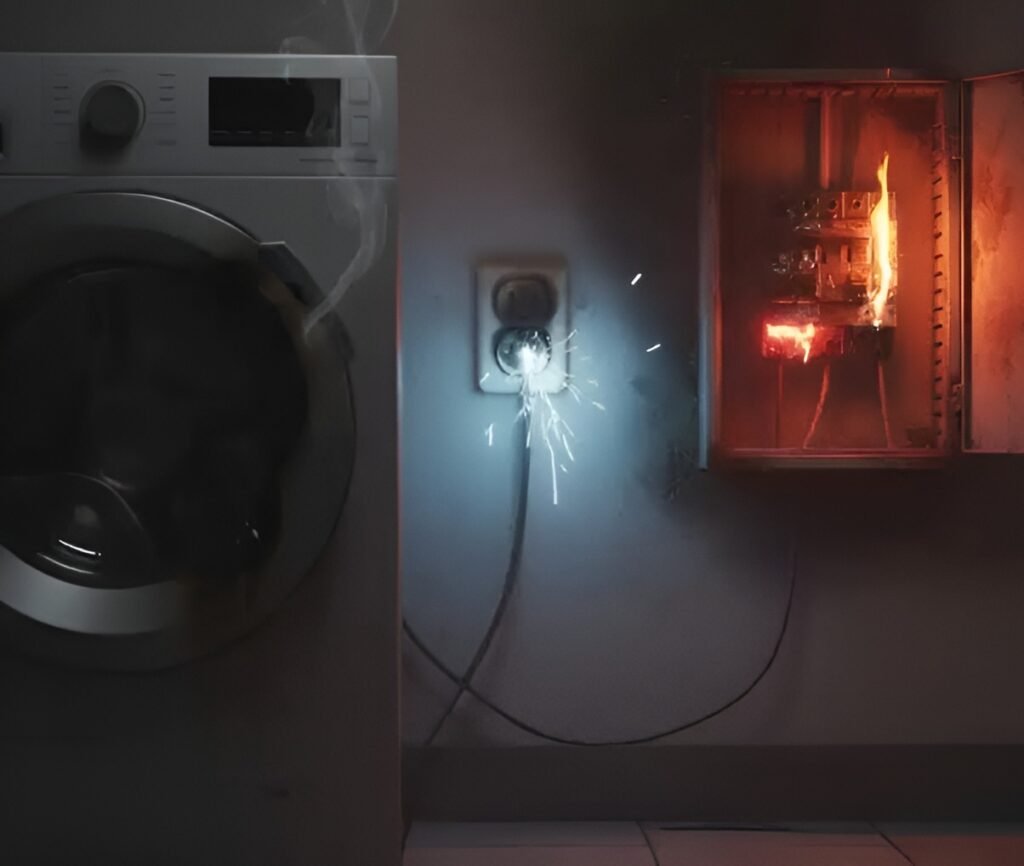
A washing machine usually trips the power because an electrical component is leaking current, creating a short circuit, or drawing more electricity than the circuit can safely handle. Common causes include a faulty heating element, damaged wiring, a worn motor, a defective drain pump, or moisture reaching internal electrical components.
How to Check
Check whether the power trips immediately after switching the machine on or during a specific stage, such as heating or spinning. Inspect the power cable and plug for visible damage or burn marks. If the circuit breaker continues to trip, avoid resetting it repeatedly until the cause has been identified.
Solution
Replace damaged electrical components only after confirming the source of the fault. If the problem cannot be identified through basic checks, professional washing machine repair services are recommended to diagnose the electrical system safely and prevent further damage.
Why Is My Washing Machine Showing an Electrical Error Code?
Electrical error codes appear when the washing machine detects a fault that prevents normal operation. Depending on the brand, the error may indicate problems with the control board, wiring, heating element, motor, drain pump, door lock, or water sensors.
How to Check
Record the error code displayed on the control panel and refer to the user manual for its meaning. Restart the machine after disconnecting the power for a few minutes. If the same error returns, the fault usually requires further inspection.
Solution
Simple issues such as a loose connector or temporary electronic fault may be resolved by resetting the appliance. Persistent error codes normally require diagnosis to identify the failed electrical component before replacement.
Why Is My Washing Machine Motor Not Working?
A washing machine motor may stop working because of worn carbon brushes, a faulty start capacitor, damaged wiring, a failed control board, or an overheated motor. When the motor cannot operate correctly, the drum may fail to rotate, spin slowly, or remain completely still.
How to Check
Listen for unusual sounds when the wash cycle starts. A humming sound without drum movement may indicate a motor or capacitor problem, while complete silence can point to an electrical supply or control board fault. Also check whether the drum turns freely by hand when the machine is switched off.
If the motor hums but the drum fails to rotate, or if you hear grinding noises during operation, read our complete guide on washing machine motor, spin, and drum problems to diagnose internal drive faults.
Solution
Replacing worn carbon brushes, faulty capacitors, or damaged wiring often restores normal operation. If the motor winding has failed or the motor has sustained significant internal damage, replacement is generally the most reliable option.
Can a Washing Machine Motor Be Repaired?
Yes, many washing machine motors can be repaired depending on the type and extent of the damage. Problems such as worn carbon brushes, a faulty capacitor, loose wiring, or damaged electrical connections are often repairable. However, a motor with burnt windings or severe internal damage is usually more practical to replace than repair.
How to Check
If the motor hums but the drum does not rotate, or if a burning smell is noticeable during operation, the motor should be inspected. A qualified technician can test the motor, capacitor, and electrical connections to identify the exact fault.
Solution
Minor electrical faults can usually be repaired by replacing the failed component. When the motor has extensive internal damage or repeated failures, replacing the motor provides a more reliable long-term solution.
What Causes Electrical Faults in a Washing Machine?
Electrical faults in a washing machine are commonly caused by damaged wiring, faulty heating elements, defective motors, worn electrical connectors, moisture entering internal components, or a malfunctioning electronic control board. In some cases, unstable household voltage or overloaded electrical circuits may also contribute to repeated electrical problems.
Modern washing machines contain several electrical components that work together throughout each wash cycle. If one component develops a fault, it can affect the overall performance of the appliance and may trigger safety features such as circuit breakers or electrical error codes.
Common Electrical Faults
- Damaged or loose internal wiring
- Faulty heating element
- Defective motor or capacitor
- Malfunctioning electronic control board
- Moisture affecting electrical components
- Burnt electrical connectors
- Faulty door lock assembly
- Damaged power cord or plug
How to Check
Look for visible signs such as burnt wiring, melted connectors, moisture around electrical components, or unusual burning smells. Frequent power trips or recurring error codes also indicate that an electrical inspection is required.
Solution
Replace only the component responsible for the fault rather than changing multiple parts unnecessarily. Accurate diagnosis helps reduce repair costs and prevents further electrical damage.
Related Reading: Moisture reaching internal components is a common cause of electrical faults — see our guide on Washing Machine is Draining, Filling & Leaking Problems in Dubai
How Much Does Washing Machine Electrical Repair Cost in Dubai?
The cost of repairing washing machine electrical faults in Dubai depends on the failed component, the appliance brand, the availability of replacement parts, and the complexity of the repair. Smaller electrical issues are generally more affordable, while repairs involving major electronic components require more labour and specialised parts.
Typical Electrical Repair Price Range
- Electrical diagnosis: AED 80–150
- Capacitor or wiring repairs: AED 120–250
- Door lock replacement: AED 150–300
- Water inlet valve replacement: AED 150–320
- Carbon brush replacement: AED 120–300
- Heating element replacement: AED 180–450
- Control board (PCB) repair or replacement: AED 400–900
- Motor repair or replacement: AED 300–1,200
The final cost depends on the exact fault. A damaged capacitor or loose electrical connection is usually less expensive to repair than replacing a control board or washing machine motor.
How Much Does Washing Machine Repair Cost in Dubai?
Repair costs can vary significantly because no two washing machine faults are exactly the same. A simple blockage inside the drain filter may take only a short time to fix, while replacing a motor, control board, or drum bearings requires more labour and expensive replacement parts.
For this reason, repair companies usually diagnose the fault before confirming the final cost.
What Can You Expect to Pay?
Most washing machine repairs in Dubai fall into one of three categories.
Minor Repairs (AED 100–300)
These are common faults that can usually be resolved quickly without replacing major components.
Examples include:
- Cleaning a blocked drain filter
- Replacing a drive belt
- Repairing or replacing a door lock
- Cleaning the detergent dispenser
- Removing minor drainage blockages
Standard Repairs (AED 200–500)
These repairs involve replacing individual components that affect the washing machine’s performance.
Common examples include:
- Replacing the drain pump
- Installing a new water inlet valve
- Replacing the heating element
- Repairing electrical wiring
- Replacing a pressure switch
Major Repairs (AED 400–1,200+)
More complex faults usually involve major mechanical or electronic components and require additional labour.
Examples include:
- Motor repair or replacement
- Control board (PCB) repair
- Drum bearing replacement
- Internal wiring faults
- Multiple component failures
Why Do Repair Costs Vary?
The final repair cost depends on more than just the faulty part. Factors that can influence the price include:
- The washing machine brand and model.
- The availability of genuine replacement parts.
- The complexity of the repair.
- Labour time required to access internal components.
- Whether more than one fault is present.
Helpful Maintenance Tip
Regular cleaning, avoiding overloaded wash cycles, and inspecting the power cord periodically can reduce the risk of electrical faults. Following the manufacturer’s maintenance recommendations also helps improve appliance performance and extend its service life.Electrical faults should never be ignored, especially if the appliance repeatedly trips the circuit breaker or shows signs of overheating. Following general electrical appliance safety recommendations can help reduce the risk of electric shock and further damage.
FAQs
Can a washing machine trip the power without being faulty?
Yes. A washing machine may trip the power because of an overloaded household circuit, a faulty wall socket, or unstable electrical supply. If the problem occurs repeatedly with only the washing machine connected, the appliance should be inspected for an internal electrical fault.
Is it safe to keep using a washing machine after it trips the power?
No. Repeatedly resetting the circuit breaker without identifying the cause can increase the risk of further electrical damage or electric shock. The appliance should remain switched off until the fault has been identified and repaired.
Can a faulty motor cause a washing machine to trip the electricity?
Yes. A motor with damaged windings, worn insulation, or internal electrical failure can draw excessive current or leak electricity, causing the circuit breaker or residual current device (RCD) to trip.
Do electrical error codes always mean the control board is faulty?
No. Electrical error codes can also be triggered by faulty sensors, wiring, heating elements, motors, drain pumps, or door lock assemblies. The control board is only one of several possible causes.
Can a damaged heating element trip the circuit breaker?
Yes. A heating element that has developed an internal electrical leak can trip the breaker as soon as it begins heating water. This is one of the most common causes of power trips in automatic washing machines.
Does a damaged power cord cause electrical problems?
Yes. A worn or damaged power cord may create intermittent electrical faults, overheating, or short circuits. Any signs of exposed wiring, burn marks, or loose connections should be addressed immediately.
How long does washing machine electrical repair usually take?
Simple repairs, such as replacing a capacitor, power cord, or door lock, can often be completed on the same day. More complex repairs involving motors or electronic control boards may take longer, depending on the availability of replacement parts.
Is repairing an electrical fault cheaper than replacing a washing machine?
In many cases, yes. Replacing a damaged electrical component is often more cost-effective than purchasing a new appliance, particularly when the washing machine is relatively new and in otherwise good condition.
Conclusion
Electrical problems in a washing machine should never be ignored, as they can affect both the appliance’s performance and household safety. Issues such as repeated power trips, electrical error codes, motor failures, or damaged wiring often indicate a fault that requires prompt attention. While basic visual checks can help identify obvious problems, accurate diagnosis is essential before replacing electrical components.
Understanding the likely cause allows repairs to be carried out more efficiently and helps prevent unnecessary expenses. If a washing machine continues to trip the power, display electrical errors, or fail to operate correctly after basic checks, arranging a professional inspection is the safest way to restore reliable performance.