
A dishwasher not drying dishes is rarely a sign that the machine has failed. In most cases the cause is a setting, a loading habit, or an empty rinse aid dispenser, all of which take minutes to fix and cost nothing or very little. The heating element is the one genuine fault behind this symptom, and it is far less common than the simple causes ahead of it.
The order of the checks matters. Working from the easiest and cheapest to the most technical avoids paying for a repair that a rinse aid refill would have solved, and it makes clear when a technician is genuinely needed.
Is It Normal for a Dishwasher to Leave Dishes Slightly Wet?
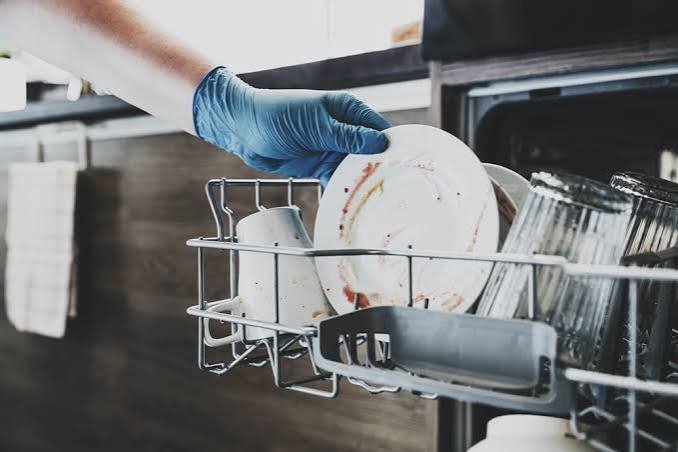
Yes, to a degree. Many modern dishwashers, particularly Bosch, Siemens, and other European models, use condensation drying rather than a fan or a blast of hot air. The final rinse heats the dishes, and moisture then condenses on the cooler stainless steel walls of the tub and drains away. Items that hold heat well, like ceramic and glass, dry fully. Plastic holds less heat, so a few drops on plastic items after a normal cycle is expected and does not indicate a fault.
Is the Rinse Aid Empty or Set Too Low?
An empty or under-dosed rinse aid dispenser is the most common cause of wet dishes. Rinse aid lowers the surface tension of the final rinse water so it sheets off dishes instead of beading into droplets, and without it, those droplets sit on the surface and never dry properly.
How to check: Most dishwashers have an indicator light or a visible level window on the rinse aid dispenser. If the light is on, or the dispenser is empty, refill it and run a normal cycle.
The fix: If the dispenser is full and dishes are still wet, the dosing dial may be set too low. Increase it one step at a time rather than setting it to maximum, since too much rinse aid leaves a streaky film on glassware.
Is the Wrong Cycle or Eco Mode Being Used?
Eco and quick cycles often produce wetter dishes. Eco programs use lower water temperatures to save energy, and a cooler final rinse leaves dishes with less stored heat to evaporate moisture. Quick cycles shorten or skip the drying phase entirely.
How to check: Run the same load on a standard or intensive cycle and compare. If the dishes come out noticeably drier, the cycle choice was the cause rather than a fault.
The fix: Use eco mode for lightly soiled loads where a few damp items are acceptable, and a standard cycle when dry dishes matter more than energy savings. Many machines also offer an extended or extra dry option that adds heat to the final rinse, which is worth enabling for loads with plastics. The trade-off is higher energy use, which is worth weighing against DEWA’s guidance on household energy consumption for households running the dishwasher daily.
Why Are Plastic Items Always the Wettest?
Plastic retains far less heat than glass, ceramic, or metal, so it cannot evaporate water off its surface the way other materials do. Water also tends to pool in the concave bases of plastic containers and lids, where it sits regardless of how well the cycle ran. Placing plastics on the top rack, angled so water runs off instead of pooling, and enabling the extra dry option both help. Wiping the occasional damp plastic item is normal even in a perfectly healthy machine.
Does the Way the Dishwasher Is Loaded Affect Drying?
Yes, loading has a direct effect on drying. Overcrowding blocks hot water and air from reaching every surface, and items facing upward collect pooled water instead of letting it run off.
Cups, bowls, and containers should face down and tilted slightly, so water drains rather than collects. Items should not nest inside each other, since trapped water between surfaces cannot evaporate. Leaving space between items also lets the heated air in the tub circulate evenly. Tall items placed at the back of the lower rack can also shield smaller items behind them from the spray, so mixing heights thoughtfully makes a visible difference.
Does Standing Water in the Tub Point to a Drainage Problem?
Sometimes. Water left sitting in the base of the tub at the end of a cycle raises humidity inside the machine, which keeps dishes damp even when the heating and rinse aid are working correctly. A small amount of water around the filter is normal. A visible pool is not.
How to check: Open the door at the end of a finished cycle and look at the base of the tub. If more than a shallow film of water remains, check the filter for trapped food debris and make sure the drain hose is not kinked behind the machine.
The fix: Cleaning the filter resolves most cases. If water still pools after a clean filter and a clear hose, the drain pump may be failing, which is a technician repair rather than a home fix.
Is the Heating Element Failing?
A failing heating element is the main mechanical cause of a dishwasher not drying dishes. The element heats both the wash water and the final rinse, and when it weakens or fails, the water never reaches the temperature needed to dry the load.
Signs it is the element:
- Dishes are wet and the tub interior feels cool at the end of the cycle
- Dishes are also coming out less clean, since detergent works poorly in cooler water
- The problem persists across every cycle type, rinse aid is full, and loading is correct
The fix: Heating element replacement is a technician repair, typically AED 250 to 500 in Dubai depending on brand and part availability. In Dubai specifically, scale buildup is a leading cause of element failure, which is why monthly descaling matters. The process is covered in the dishwasher descaling guide.
Is the Drying Vent or Fan Working?
Some dishwashers, mostly mid-range and premium models, add a vent or a small fan to assist drying instead of relying on condensation alone. When a vent flap sticks closed or a fan motor stops, moist air stays trapped in the tub and dishes come out damp even though the wash itself was fine.
A simple check is listening during the drying phase. Machines with a fan usually produce a faint whirring sound, and a vent flap can often be seen opening at the top or front of the tub. If the machine is meant to have this feature and it is silent or the flap never moves, the vent assembly or fan is the likely cause. This is a component repair for a technician, and it is worth mentioning when booking so the right part is brought on the first visit.
Can the Detergent Type Affect Drying?
It can. Some all-in-one tablets include a built-in rinse aid component, but it is usually modest and calibrated for average water, not for Dubai’s harder supply. A tablet-only routine with no separate rinse aid often leaves dishes wetter than a routine that adds rinse aid. Switching to a detergent formulated to include drying support, or simply refilling the separate rinse aid dispenser, usually resolves this. Cheap or very low-quality detergents also tend to leave a film that holds water on surfaces.
Can Hard Water Make Drying Worse?
Yes. Hard water leaves mineral deposits that create a slightly rough surface on dishes and glassware, which holds water droplets in place instead of letting them sheet away. Scale on the heating element also reduces how hot the water gets. Regular descaling and keeping the rinse aid topped up address both effects at once.
Quick Fixes That Improve Drying Straight Away
Several adjustments take effect on the very next cycle, with no tools and no repair:
- Refill the rinse aid dispenser and raise the dial one step if it was set low
- Switch from eco or quick to a standard cycle, and enable extra dry if available
- Rearrange the load so bowls and cups face down and nothing nests
- Move plastics to the top rack, angled so water runs off
- Open the door slightly once the cycle ends and let the steam escape for 15 to 20 minutes, which lets residual heat finish the drying
If dishes still come out wet after all five, the cause is no longer a habit or a setting, and the diagnosis table below helps narrow down what is left.
Quick Diagnosis Table
| Symptom | Most Likely Cause | First Fix |
| Everything slightly wet, rinse aid light on | Empty rinse aid dispenser | Refill and rerun |
| Only plastics wet | Normal condensation drying behavior | Top rack placement, extra dry option |
| Wet after eco or quick cycles only | Low-temperature cycle | Switch to standard cycle |
| Water pooled in cup bases and bowls | Loading angle | Tilt items downward, avoid nesting |
| Standing water in the tub base | Blocked filter or drain | Clean filter, check hose |
| Wet and tub feels cool at cycle end | Heating element issue | Technician inspection |
| Wet with no fan sound or vent movement | Drying vent or fan fault | Technician inspection |
| White spots plus wet dishes | Hard water scale | Descale and use rinse aid |
How to Stop Dishes Coming Out Wet in Future
Prevention comes down to a short routine. Keep the rinse aid dispenser topped up, checking the indicator weekly instead of waiting for dishes to come out wet. Clean the filter every couple of weeks so water drains fully. Descale monthly to protect the heating element from the scale buildup that causes most element failures in Dubai. And reserve eco mode for lightly soiled loads, using a standard cycle whenever dry dishes matter. Together these cover almost every non-mechanical cause of wet dishes, and they extend the machine’s life as a side effect.
When Does a Dishwasher Not Drying Dishes Need a Technician?
A technician is needed when rinse aid is full, a standard cycle with extra dry is selected, loading is correct, the filter is clean, and dishes are still wet with a cool tub at the end of the cycle. At that point the cause is almost certainly the heating element, a thermostat, the drying vent or fan, or a control fault, none of which are safe or practical to test without proper equipment. A qualified dishwasher technician can confirm which component has failed before any part is replaced, which avoids paying for the wrong repair.
FAQs
Why is a dishwasher not drying dishes even though the rinse aid is full?
The cycle choice, loading, or heating element is the likely cause. Eco and quick cycles use cooler rinse water and shorter drying phases, so switching to a standard cycle is the first thing to test. If a standard cycle with extra dry still leaves dishes wet and the tub cool, the heating element needs inspection.
Is it normal for plastic to stay wet in a dishwasher?
Yes. Plastic holds much less heat than glass or ceramic, so water on it evaporates poorly under condensation drying. Placing plastics on the top rack and using an extra dry option reduces this, though a few damp items are normal.
Does using more rinse aid fix wet dishes faster?
Only up to the correct setting. Raising the dosage one step at a time helps if it was set too low, but too much leaves a cloudy, streaky film on glassware without drying dishes any better.
Can a dishwasher not drying dishes be caused by a blocked drain?
Indirectly. Standing water left in the base of the tub raises humidity inside the machine and can leave dishes damp even when everything else is working. If water remains in the tub after a cycle ends, the drain and filter should be checked first.
How much does it cost to fix a dishwasher that is not drying dishes?
If the cause is rinse aid, cycle choice, or loading, the fix costs nothing or the price of rinse aid. If the heating element has failed, replacement typically runs AED 250 to 500 in Dubai, plus any diagnostic fee that is not waived.
Does a dishwasher that does not dry properly also clean poorly?
Often, yes. Both symptoms can share the same root cause, a heating element or water temperature fault, since detergent also performs worse in cooler water. If dishes are coming out both wet and not fully clean, a heating issue becomes more likely.
Is it better to open the door after the cycle to help dishes dry?
Opening the door slightly once the cycle finishes lets steam escape and residual heat finish the job, so it genuinely helps. On machines that rely on condensation drying, opening it too early, before the final heated rinse completes, can interrupt that process, so wait until the cycle has fully ended.