
Every AC noise means something different, and matching the sound to the cause is usually faster than guessing. Rattling points to something loose, buzzing usually means an electrical issue, humming often signals a failing capacitor or motor, and grinding points to worn mechanical parts.
Some of ac making noise is completely normal for a running AC, which makes it worth knowing not just what each sound means, but which ones are safe to leave alone versus which ones call for a technician right away. This guide breaks down each sound individually, what typically causes it, and the right next step for each one.
Jump to a section
- Why Does an AC Rattle or Vibrate?
- Why Does an AC Buzz?
- Why Does an AC Hum?
- Why Does an AC Grind or Screech?
- Why Does an AC Click?
- Which AC Noises Are Safe to Ignore?
- Dubai Specific Warning Do Not Delay Strange Noises
Why Does an AC Rattle or Vibrate?
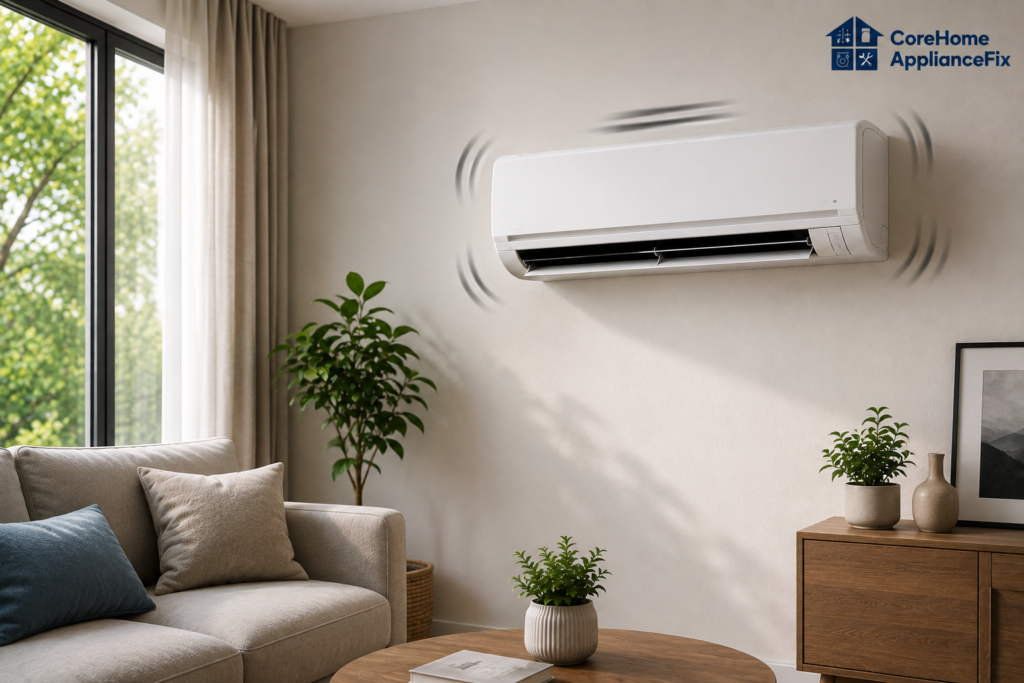
Rattling and vibration are almost always mechanical rather than electrical, which makes them some of the more straightforward AC sounds to diagnose and often the easiest to fix.
Are Panels or Screws Loose?
Loose panels are one of the most common causes of a persistent rattle, especially on outdoor units exposed to wind and vibration over time.
How to Check: Look and feel for any loose panels, covers, or screws on both the indoor and outdoor units, particularly around the edges where panels connect.
Solution: Tighten any loose screws and panels using a standard screwdriver. If the rattle continues after everything visible feels secure, the cause is likely deeper inside the unit and needs a technician’s inspection.
Is the Outdoor Unit Sitting Level?
An outdoor unit that isn’t properly leveled on its mounting base can vibrate against the surface it’s sitting on every time it runs.
How to Check: Check whether the outdoor unit sits flat and stable on its base, or if it rocks slightly when gently pushed.
Solution: Re-leveling and securing the unit on its mounting pad resolves this in most cases. This is usually a quick fix a technician can handle during a routine visit.
Is a Fan Blade Bent or Obstructed?
A bent or obstructed fan blade creates a rhythmic rattling or clicking sound as it spins, often worsening the faster the fan runs.
How to Check: Listen for a rattle that changes pitch or speed in sync with the fan, and check for any visible debris caught in the outdoor fan cage.
Solution: Clear any visible debris first. If the rattling continues, the fan blade itself may be bent and needs to be straightened or replaced by a technician, since forcing a bent blade back into shape without proper tools can cause further damage.
Is a Component Loose Inside the Unit?
Some rattles come from something loose internally, such as a mounting bracket or internal panel, rather than anything visible from the outside.
How to Check: This isn’t something to diagnose without opening the unit. Suspect this if external panels and screws are already secure and the rattle persists.
Solution: A technician opens the unit to identify and secure the specific loose component. This is a straightforward fix once located, but requires proper access to the unit’s interior.
Why Does an AC Buzz?
Buzzing is one of the more serious AC sounds because it almost always points to an electrical problem.
Electrical Fault at Startup
A steady buzz right when the unit powers on usually means a failing contactor or loose electrical connection. Switch the unit off immediately and call a technician. Electrical faults escalate quickly in Dubai’s heat, and Dubai Civil Defence’s home electrical safety guidance recommends addressing any burning smell or persistent electrical sound without delay.
Loose Part Vibrating Against Casing
Not all buzzing is electrical. A loose component vibrating against a metal panel can sound very similar. Gently press on the outdoor unit casing — if the buzz changes pitch or stops it is likely mechanical rather than electrical. A technician can tell the difference quickly.
Compressor Struggling to Start
If the buzzing is followed by the unit shutting off shortly after starting, the compressor is struggling to engage. This usually points to a capacitor or compressor fault. Leave the unit off until a technician inspects it. Repeated restart attempts add unnecessary stress to an already struggling compressor.
Why Does an AC Hum?
Humming is usually quieter and steadier than buzzing, and it points toward a fairly specific set of causes centered on the motor and capacitor.
Is the Capacitor Failing?
Humming without the fan actually spinning is one of the clearest signs of a failing capacitor, since the motor is trying to start but isn’t getting the electrical push it needs.
How to Check: Listen for a steady hum where the fan isn’t moving, or is moving much slower than normal.
Solution: The capacitor is tested and replaced if faulty, which usually resolves humming and startup issues immediately. Capacitor and motor replacements are standard repairs check our comprehensive AC repair cost guide for Dubai to see standard market pricing for electrical components and labor.
Is the Motor Under Strain?
A motor working harder than it should, often due to a mechanical resistance elsewhere, can produce a lower, more labored hum during operation.
How to Check: Compare the hum to how the unit normally sounds when running well. A hum that feels or sounds like the motor is working overly hard, rather than a light steady tone, points here.
Solution: A technician load-tests the motor and checks for anything restricting normal movement, such as debris or a mechanical obstruction, before deciding whether the motor itself needs repair.
Why Does an AC Grind or Screech?
Grinding and screeching are the noises worth taking most seriously, since they almost always point to physical wear on moving parts rather than something simple.
Are the Fan or Motor Bearings Worn?
Worn bearings are the most common cause of a grinding or screeching sound, typically from the outdoor unit’s fan or motor assembly.
How to Check: Listen for a rough, mechanical grinding or high-pitched screeching sound, most noticeable from the outdoor unit.
Solution: The bearings need to be inspected and either lubricated or replaced, depending on wear severity. Continuing to run the unit with worn bearings risks full motor failure, so a same-day AC technician visit is the safer option rather than leaving it running.
Is Something Obstructing the Fan?
A screeching sound can also come from something physically contacting the spinning fan blade rather than worn bearings.
How to Check: Look for any visible debris, branches, or objects caught in the outdoor fan cage that could be making contact with the blade as it spins.
Solution: Switch the unit off before clearing any visible obstruction by hand. If the screeching continues once the obstruction is cleared, the bearings are the more likely cause and need professional inspection.
Why Does an AC Click?
Clicking is generally the least serious of the common AC noises, though it still points to a specific component worth checking.
Is the Relay or Thermostat Switch Clicking?
A clicking sound right at startup or shutdown is normal in small doses, but frequent or unusually loud clicking can point to a relay or thermostat switch nearing the end of its lifespan.
How to Check: Notice whether the clicking is a single sound per cycle, which is normal, or a repeated, irregular clicking throughout operation.
Solution: A technician tests the relay and thermostat and replaces whichever component is triggering the click, usually a quick and low-cost repair.
Which AC Noises Are Safe to Ignore?
| Sound | Timing | Safe to Ignore? |
| Soft airflow whoosh | Continuous, low volume | Yes — normal operation |
| Single click | At startup/shutdown only | Yes — normal component engagement |
| Faint steady hum | Continuous, very low volume | Yes — normal motor/compressor sound |
| Brief rattle | First few seconds only, doesn’t return | Usually — components settling |
| Persistent rattle | Continuous throughout cycle | No — check panels and mounting |
| Buzzing | Any point during operation | No — possible electrical fault |
| Grinding or screeching | Any point during operation | No — worn bearings, needs prompt attention |
| Repeated irregular clicking | Throughout operation, not just startup | No — check relay/thermostat |
Dubai Specific Warning Do Not Delay Strange Noises
In most countries a strange AC noise might be something you monitor for a few weeks before calling a technician. In Dubai this approach is risky. Here is why:
- Dubai AC units run 16 to 24 hours per day in summer — wear happens much faster
- Outdoor temperatures above 45 degrees put extreme stress on compressors and motors
- Dust storms block condenser coils and fan units, increasing internal temperatures further
- A small bearing fault left running for one week in Dubai summer heat can destroy a motor completely
The rule for Dubai: if the AC makes a new noise it did not make before, a technician should be called within 24 to 48 hours rather than waiting.
FAQs
What does it mean if an AC makes noise only when it first turns on?
A brief sound at startup, such as a single click or short rattle that fades within seconds, is usually normal as components engage and settle into position. If the noise continues well past startup or returns throughout the cycle, it points to an actual fault rather than a normal startup sound.
Can a noisy AC still cool properly?
Yes, at least for a while. Many AC noises, especially rattling or mild clicking, don’t immediately affect cooling performance. However, sounds like grinding or buzzing often precede a drop in performance as the underlying fault worsens, so cooling still working normally isn’t a reason to delay a check.
Is it safe to run an AC that’s making a grinding noise?
No. Grinding almost always means worn fan or motor bearings, and continuing to run the unit risks turning a straightforward bearing repair into a full motor replacement. The unit should be switched off until a technician inspects it.
Why does an AC make noise only during summer?
Higher outdoor temperatures and longer, more demanding cooling cycles put extra strain on components that may already be slightly worn, which is why noises that were barely noticeable in cooler months often become obvious once summer usage ramps up.
Does a noisy outdoor unit always mean something is broken?
Not always. Some outdoor unit sounds, like a soft fan whoosh or a faint hum, are simply part of normal operation. The sounds worth acting on are the ones that are new, persistent, or clearly different from how the unit has always sounded.
How quickly should a new AC noise be checked in Dubai specifically?
Given how many hours AC units run here and how much strain the heat already places on components, a new or worsening noise is best checked within 24 to 48 hours rather than monitored for weeks, since a minor fault can escalate quickly under continuous summer use.