
The type of smell an AC produces is usually the fastest way to diagnose what’s wrong with it. In Dubai, where an AC smells bad far more often than in cooler, drier climates, the four most common odors, musty, burning, chemical, and sewage-like, each point to a distinct and identifiable cause.
A musty or moldy smell almost always means trapped moisture or mold growth inside the unit. A burning smell points to an electrical fault. A chemical or sharp smell can signal a refrigerant leak, and a sewage-like smell usually traces back to a blocked or dry drain line. This guide breaks down each smell separately: what it means, a quick check that can be done without tools, and the point where the fix needs to be handed to a certified technician.
Jump to a section:
- Why Does an AC Smell Musty or Moldy?
- Why Does an AC Smell Like Burning?
- Why Does an AC Smell Like Chemicals or Gas?
- Why Does an AC Smell Like Sewage or Rotten Eggs?
- Why Does an AC Smell Bad Only When It First Turns On?
- Is a Bad AC Smell Dangerous to Breathe?
Why Does an AC Smell Musty or Moldy?
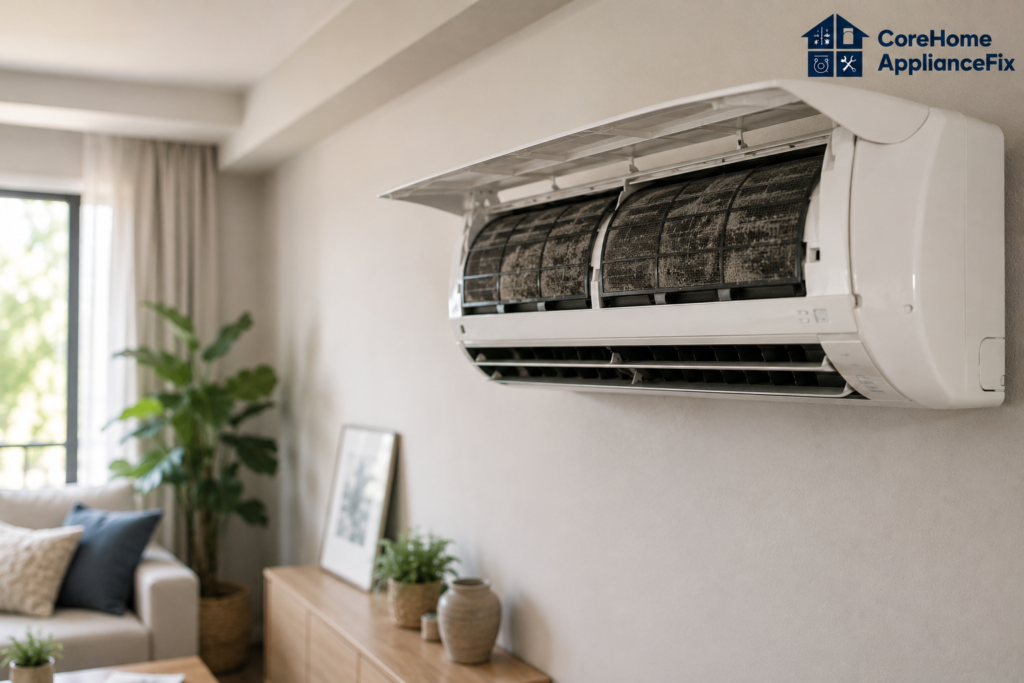
A musty or moldy smell is the most common AC odor complaint in Dubai, and it almost always comes down to trapped moisture sitting somewhere inside the unit long enough for mold or mildew to start growing. Dubai’s humidity levels make this more likely than in drier climates, which is part of why DEWA’s sustainability guidance recommends regular cooling system maintenance to manage both moisture buildup and energy efficiency.
Is the Drain Line Blocked or Holding Standing Water?
A blocked or slow drain line lets condensation sit inside the unit instead of draining away, creating the exact damp environment mold needs.
How to Check: Look at the drain outlet outside for a slow or irregular drip instead of a steady flow, and check the area around the indoor unit for any dampness or standing water.
Solution: The drain line needs to be flushed and cleared of the dust, algae, or mold buildup causing the blockage. This should be done with a proper vacuum or flushing tool rather than attempted with household items, since forcing a blockage can damage the line. Once cleared, the musty smell typically clears within a day or two as trapped moisture finishes draining.
Is the Evaporator Coil Holding Moisture?
The evaporator coil stays wet during normal operation, but if airflow around it is restricted, that moisture lingers instead of evaporating, which is where mold growth typically starts.
How to Check: A musty smell that gets stronger right when the AC starts up is a common sign the moisture source is on the coil itself rather than the drain line.
Solution: The coil needs a professional deep clean, since surface wiping is not enough to remove mold growing inside the fins. A technician can also confirm whether restricted airflow, from a dirty filter or blocked return vent, is what is keeping the coil wet in the first place.
Is the Air Filter Trapping Moisture and Dust?
A dirty filter does not just restrict airflow, it also holds dust and moisture in one place long enough for mold to develop directly on the filter itself.
How to Check: Remove the filter and look for any visible dark spots, discoloration, or a damp, musty smell coming directly from the filter material.
Solution: A washable filter should be rinsed with water only, dried completely, and reinserted only once fully dry, since reinstalling a damp filter reintroduces the same problem within days. A non-washable filter showing mold should be replaced rather than cleaned. For units where this keeps recurring every few weeks, a full AC repair and cleaning service can identify whether a deeper airflow or drainage issue is causing the filter to stay damp.
Has the AC Been Left Off or on Fan Mode for an Extended Period?
Stagnant water left inside the unit during long periods of low use, common during travel or between seasons, is one of the most overlooked causes of a sudden musty smell.
How to Check: Notice whether the smell appeared shortly after the AC was left off, on fan-only mode, or used only occasionally over the past few weeks.
Solution: Running the AC on cooling mode for 20 to 30 minutes often clears a mild case by drying out trapped moisture. If the smell persists after this, the drain line and coil should both be inspected, since standing water may have already allowed mold to establish rather than just linger.
Why Does an AC Smell Like Burning?
A burning smell is one of the more serious odors an AC can produce, since it usually points directly to an electrical fault rather than dust or moisture.
Is the Motor or Fan Overheating?
A struggling motor or fan can overheat and produce a burning smell well before it fails completely, especially in units running long hours through Dubai’s peak summer months.
How to Check: Notice whether the burning smell is accompanied by unusual noise, such as grinding or straining, or whether the fan appears to be spinning slower than normal.
Solution: The AC should be switched off immediately rather than left running, since continuing to operate an overheating motor risks permanent damage or fire. A technician needs to inspect the motor and fan assembly, checking bearings, wiring, and airflow restrictions before the unit is used again.
Is There an Electrical or Wiring Fault?
A burning smell with no obvious mechanical cause often traces back to overheating wiring, a failing capacitor, or a loose electrical connection.
How to Check: Look for a burning smell that appears right at startup or intensifies shortly after the unit is switched on, sometimes alongside a faint burning odor near the indoor unit’s electrical panel.
Solution: This should never be inspected or opened at home, since it involves live electrical components that can carry a charge even when the unit is switched off. A certified technician needs to test the wiring, capacitor, and connections, and replace whichever component has overheated or failed. Continuing to run the unit in the meantime risks a full electrical failure.
Is Dust Burning Off a Newly Started Unit?
Not every burning smell signals a fault. A unit that has sat unused for a while can produce a faint, temporary burning smell as accumulated dust burns off internal components during the first few minutes of use.
How to Check: This applies specifically to a mild smell at startup that clears within 10 to 15 minutes and does not return once the unit has been running for a while.
Solution: If the smell fades on its own and does not return, no repair is needed. If it persists beyond the first 15 minutes, intensifies, or returns on future startups, it should be treated as an electrical fault rather than dust burn-off, and inspected by a technician.
A persistent burning smell should never be ignored or run through, since electrical faults inside an AC can escalate quickly and pose a genuine fire risk.
Why Does an AC Smell Like Chemicals or Gas?
A chemical or sharp, sweetish smell is one of the odors worth taking seriously right away, since it is most often tied to a refrigerant leak rather than dust or moisture.
Is There a Refrigerant Leak?
Refrigerant is not supposed to produce a strong smell on its own, but a leak escaping near the indoor unit or refrigerant lines can create a faint chemical or slightly sweet odor.
How to Check: Listen for a hissing sound near the indoor unit or exposed copper lines alongside the smell, and note whether cooling performance has dropped noticeably in recent days.
If your air conditioner is blowing warm air or ice has formed on the copper lines, read our troubleshooting guide on why an AC is not cooling in Dubai for a full breakdown of gas leaks and coil freezes.
Solution: A suspected refrigerant leak needs professional leak detection and pressure testing before anything else is done. Refrigerant is a regulated substance under UAE safety standards, so locating the leak, repairing the line, and recharging the system all need to be handled by a certified technician.
Is the Unit Newly Installed?
A faint chemical smell in the first few days after installation is fairly common and usually traces back to manufacturing residues or protective coatings burning off during initial use.
How to Check: Compare the timing of the smell against the installation date. A smell appearing within the first week of a new unit points here, while one appearing on a unit that has run fine for months does not.
Solution: This typically clears on its own within a few days of normal operation. If the smell is still present after a week, or grows stronger instead of fading, it should be treated as a possible refrigerant issue and checked by a technician rather than assumed to be residue.
Are Plastic Components Overheating?
Some AC units use plastic housings or components near the electrical panel that can release a chemical-like smell if they begin to overheat.
How to Check: Notice whether the smell sits closer to a hot plastic odor than a sweet chemical one, and check if the unit feels warmer to the touch than usual near the panel.
Solution: The unit should be switched off and left off until a technician has inspected the electrical panel and surrounding components, since overheating plastic near live wiring carries the same fire risk as an electrical fault.
A chemical or gas-like smell should always be treated as a signal to stop using the unit until it has been checked, rather than something to wait out.
Why Does an AC Smell Like Sewage or Rotten Eggs?
A sewage-like or rotten egg smell is one of the more unpleasant AC odors, but it is rarely linked to the AC’s internal components. It almost always traces back to the drain line acting as a path for sewer gas or trapped organic buildup.
| Likely Source | Sign to Look For | Fix |
| Blocked or dirty drain line | Slow drainage, standing water near the indoor unit | Professional flushing and clearing of the drain line |
| Dry P-trap in the drain system | Smell is stronger after the AC has been off for a while | Running the unit restores the water seal; persistent smell needs a technician to check the trap |
| Dead insect or pest in the line | Smell is sudden and highly localized to one vent or the indoor unit | Drain line inspection and clearing by a technician |
| Mold or algae buildup inside the line | Smell is more musty-sewage than sharp, gradual onset | Same drain line flushing used for musty smells |
Is the Drain Line Blocked with Organic Buildup?
Algae, mold, and general grime inside the drain line do not just cause musty smells, heavy buildup can also produce a sewage-like odor as the material breaks down inside the pipe.
How to Check: Check the drain outlet outside for slow, blocked, or backed-up drainage, similar to the check used for musty smells, but note whether the smell itself is closer to sewage than mildew.
Solution: The line needs a full professional flush to clear the buildup. Left unaddressed, this can eventually cause the same blockage and leaking issues linked to poor drainage elsewhere in the system.
Is a Dry Trap Letting Sewer Gas Back Up?
Some drain configurations include a trap designed to hold water and block sewer gas from traveling back up the line. If the unit has been off for an extended period, that trap can dry out.
How to Check: Notice whether the smell is strongest right after the AC has been off for several days or weeks, and fades once the unit has been running for a while.
Solution: Running the AC normally for a few hours often restores the water seal and clears the smell on its own. If the smell returns quickly after each restart, the trap itself should be inspected by a technician.
Why Does an AC Smell Bad Only When It First Turns On?
A smell that appears only at startup and fades within minutes points to something building up during the time the unit sits idle, rather than an active, ongoing fault.
Is Trapped Moisture Evaporating at Startup?
Moisture that collects on the coil or inside the unit while it is off tends to release its odor in a short burst once cool air starts moving again.
How to Check: Notice whether the smell is present the moment the unit switches on, then noticeably fades or disappears within 10 to 15 minutes of continuous running.
Solution: This is usually mild and resolves as the unit dries out during normal operation. If the smell returns at every single startup rather than only after longer idle periods, the drain line and coil should be checked for the same moisture buildup causes covered earlier in this guide.
Is Dust Settling on the Coil Between Uses?
Dust that settles on the evaporator coil while the AC is off can produce a brief musty or stale smell as air first passes over it again.
How to Check: This is more likely if the unit has been on fan-only mode or switched off entirely for several days, and the smell is faint rather than sharp.
Solution: A coil clean resolves this if it happens consistently. For occasional startup smells after short idle periods, simply letting the unit run for its first cycle is usually enough.
Does the Smell Only Appear After Long Periods of Non-Use?
A startup smell that appears specifically after the unit has been off for an extended stretch, such as after travel or a change of season, points to a different cause than one appearing daily.
How to Check: Compare how long the unit was off beforehand. A smell after weeks of non-use suggests standing water or dust buildup during that idle period rather than an active fault.
Solution: Running the unit on cooling mode for 20 to 30 minutes typically clears this. If the smell is strong, sewage-like, or does not fade after the first cycle, it should be treated as one of the specific causes covered in the sections above rather than simple startup residue.
Is a Bad AC Smell Dangerous to Breathe?
Whether a bad AC smell poses a health risk depends entirely on which type of smell it is, since some are simply unpleasant while others signal something that should not be breathed in for long.
Is a Musty or Moldy Smell Harmful?
Mold growth inside an AC is a genuine air quality concern, particularly for anyone with allergies, asthma, or respiratory sensitivity.
How to Check: Notice whether the musty smell is accompanied by any physical symptoms such as sneezing, coughing, or irritated eyes shortly after the AC turns on.
Solution: The unit should be cleaned as covered in the musty smell section above. In the meantime, running the AC in a well-ventilated space and avoiding prolonged exposure in a closed room is a reasonable precaution until the mold source is cleared.
Is a Chemical or Refrigerant Smell Dangerous?
Refrigerant exposure in small amounts from a minor leak is generally low risk in a well-ventilated space, but it should still be treated seriously rather than ignored.
How to Check: Note whether the smell is faint and occasional or strong and persistent, and whether anyone in the space has experienced dizziness, headaches, or nausea.
Solution: The room should be ventilated and the unit switched off until a technician has inspected it for a leak. Strong or worsening chemical smells, especially alongside any physical symptoms, warrant leaving the space ventilated and arranging an inspection promptly rather than waiting.
Is a Burning Smell Ever Safe to Ignore?
A burning smell should never be treated as safe to breathe through or wait out, regardless of how faint it is.
How to Check: Apply the same check used earlier: if the smell does not clear within 10 to 15 minutes of a fresh startup, or returns on future use, it is not simple dust burn-off.
Solution: The unit should be switched off immediately and left off until inspected. A persistent burning smell carries both an air quality risk and a fire risk, making it the one AC odor that always calls for prompt professional attention rather than a wait-and-see approach.
Final Thoughts
Most AC smells trace back to moisture, dust, or drainage issues that clear up with a proper clean or a simple fix. Burning and chemical smells are the exceptions, and both call for switching the unit off and arranging a professional inspection rather than continuing to run it. Paying attention to which smell is present, and how it behaves over time, makes it much easier to know which situation applies.
FAQs
Why does my split AC smell bad but the outdoor unit seems fine?
The smell is almost always coming from the indoor unit, since that’s where moisture, dust, and the evaporator coil are located. The outdoor unit can look and sound completely normal even when the indoor unit is the source of a musty, burning, or chemical odor.
Can a bad AC smell go away on its own?
A mild, temporary smell tied to startup or dust burn-off can clear on its own within a few minutes of running. A smell that persists, returns at every startup, or grows stronger points to an underlying cause that needs to be addressed rather than something that resolves by itself.
Is it safe to run the AC while it smells bad?
This depends on the type of smell. Musty or mildly stale smells are generally safe to run through while a fix is arranged. Burning and strong chemical smells are not, and the unit should be switched off until inspected.
How often does an AC need cleaning to prevent bad smells?
A full clean every six months, in line with Dubai’s recommended servicing schedule, along with filter checks every one to three months, prevents most odor issues before they start. Units in humid, coastal-adjacent areas may need slightly more frequent attention.
Does a bad smell mean the AC needs to be replaced?
Not in most cases. Musty, sewage, and startup smells are almost always resolved through cleaning or a minor repair. Replacement is rarely necessary purely because of a smell, unless it is tied to a major component failure that would have needed replacing regardless.
Can AC smells affect indoor air quality throughout the whole house?
Yes, particularly with musty or moldy smells, since mold spores and trapped moisture inside the unit can circulate through the space every time the AC runs. This is one of the main reasons a persistent musty smell should be addressed rather than masked.