
Finding a puddle of water under your fridge or freezer is one of those small household problems that tends to show up at the worst possible time. It is also one of the most common calls appliance technicians receive across Dubai, since the city’s heat, humidity, and water supply all put extra strain on cooling appliances compared to what manufacturers typically designed for in cooler climates. In most cases, the cause is something fairly simple and inexpensive to fix, but it can be difficult to know where to start when all you can see is water on the kitchen floor.
This guide walks through the most common reasons a fridge or freezer leaks water in Dubai homes, how to tell which one applies to your situation, and what each fix typically involves. Whether the leak is coming from inside the fridge compartment, pooling underneath the unit, or building up around the freezer door, the same handful of causes explain the vast majority of cases. We will also cover realistic repair costs in AED, how to decide between repairing and replacing an older unit, and simple habits that reduce the chances of the same leak coming back.
Why Is The Fridge or Freezer Leaking Water?
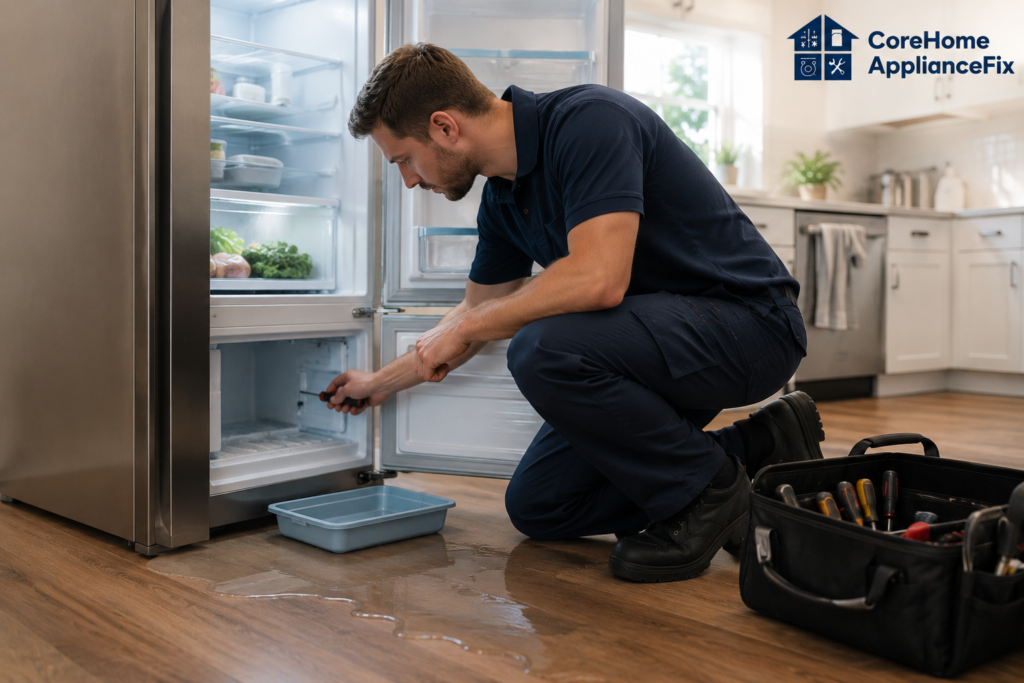
The most common cause of a fridge or freezer leaking water is a blocked or frozen defrost drain, which is especially common in Dubai because of mineral buildup from the city’s desalinated water supply. Other frequent causes include a worn door seal, a damaged water supply line, or a cracked drain pan. If your unit is leaking water and not cooling properly at the same time, switch it off and call a technician immediately, since this usually points to a more serious fault involving the compressor or refrigerant system.
Why This Happens So Often in Dubai Homes
Refrigerators and freezers work harder in Dubai than in most other climates. Outdoor temperatures regularly climb above 40 degrees Celsius in summer, and indoor humidity stays high for much of the year. Both factors push cooling systems to run longer cycles, which produces more condensation and more defrost water that needs to drain away properly.
At the same time, Dubai’s tap water comes primarily from desalination plants, and desalinated water tends to leave behind fine mineral deposits inside narrow spaces such as the fridge’s defrost drain channel. Over months of use, these deposits build up and narrow the drain until it eventually blocks. This is one of the biggest reasons fridge leaks show up more often, and more quickly, in Dubai households compared to cooler, drier climates.
How to Check Before You Call a Technician
A few quick checks will help you narrow down the cause before reading further.
- Locate where the water is coming from: inside the fridge, inside the freezer, or pooling underneath the unit.
- Note when it happens: only during the defrost cycle, or constantly throughout the day.
- Check if your model has a water dispenser or ice maker, since these add extra possible leak points.
- Check whether cooling performance has also dropped, as this changes how urgent the fix is.
- Look at how long you’ve had the unit. Older units, particularly those close to or beyond 10 years old, are more likely to have a compressor related cause rather than a simple blockage.
Common Causes and Solutions
Fridge and freezer leaks tend to fall into a small number of recurring categories. Understanding which one matches what you are seeing at home makes it much easier to decide whether a quick DIY fix will solve the problem, or whether it is worth booking a technician straight away. The sections below cover each cause in the order they typically show up in Dubai households, starting with the most frequent.
1. Clogged or Frozen Defrost Drain
This is the number one cause of fridge and freezer leaks in Dubai homes. During each defrost cycle, melted frost is meant to flow out through a small drain channel at the back of the fridge compartment. When this channel is even partly blocked, water backs up instead of draining away, and it eventually spills onto the shelves or floor. In freezers, the same mechanism applies, except the blocked water tends to refreeze inside the channel, which can make the problem worse each time the unit runs another defrost cycle.
If ice is also building up thickly along the freezer walls or around the air vents, read our complete troubleshooting guide on why frost and ice builds up in a freezer to diagnose a failing defrost heater or thermostat.
Signs: Water pooling inside the fridge, ice buildup at the back panel, water dripping onto lower shelves, or a faint smell caused by trapped moisture.
Fix: Unplug the unit and locate the drain hole, usually found at the back of the fridge compartment below the vegetable crisper or behind the rear panel. Flush it gently with warm water using a small funnel or syringe to clear loose debris. A soft pipe cleaner or bottle brush can help remove stubborn buildup. If the blockage keeps returning every few months, it likely means mineral deposits have narrowed the channel permanently, and a technician can clear or reshape the drain properly without damaging the surrounding parts.
2. Damaged or Worn Door Seal (Gasket)
The rubber gasket around the fridge or freezer door is what keeps cold air in and warm, humid air out. Once it starts to wear, crack, or lose its shape, warm air seeps in continuously. That warm air condenses against cold interior surfaces, and the resulting moisture is often mistaken for a leak. On freezer doors specifically, a failing seal can also cause frost to build up rapidly around the door frame, which then melts and drips once the unit defrosts.
Signs: Visible moisture or fog inside the fridge, a door that doesn’t feel like it is sealing tightly, longer cooling times, or the compressor running more often than usual.
Fix: Start by cleaning the gasket thoroughly with warm, soapy water. Grease and food residue are common reasons a seal stops making full contact even when the rubber itself is fine. If the gasket is cracked, flattened, or pulling away from the door, it should be replaced rather than repaired, since a partial seal will keep causing the same problem and put extra strain on the compressor.
3. Faulty Water Supply or Ice Maker Line
Fridges and freezers with a built in ice maker or water dispenser have an extra water line running from the main household supply into the unit. Over time, the fittings on this line can loosen, or the tubing itself can crack, particularly if the appliance has been moved or pushed too close to the wall. This is one of the more common freezer specific leak causes, since most ice makers sit inside the freezer compartment itself.
Signs: Water pooling behind the fridge or freezer, a slow but constant drip, or noticeably weaker water pressure from the dispenser.
Fix: Pull the unit out carefully and check the visible fittings for looseness, tightening them by hand if needed. A line that is cracked, kinked, or brittle should be replaced rather than patched, since a temporary fix in this spot tends to fail again within weeks. A technician experienced in freezer repair in Dubai can trace the full length of the line and replace only the affected section rather than the entire assembly.
4. Cracked or Overflowing Drain Pan
Underneath most fridges sits a shallow drain pan that collects the water coming down from the defrost drain, allowing it to evaporate naturally using heat from the compressor. If this pan is cracked, sitting at an angle, or simply full, the water it should be holding ends up on the floor instead.
Signs: Water appearing directly under the fridge, a pan that looks cracked or warped when inspected, or water visibly overflowing the pan’s edges.
Fix: Most drain pans can be removed from the back or underneath the unit for inspection. Clean it out regularly as part of routine maintenance, and replace it if you notice any cracks, since a damaged pan will keep leaking regardless of how clean it is.
5. Improper Leveling
Fridges and freezers are designed to sit with a very slight backward tilt so that any water inside naturally flows toward the drain rather than toward the door. If the unit is sitting unevenly, whether from an uneven floor or legs that were never adjusted, water can pool in the wrong spot entirely.
Signs: The door doesn’t close evenly on its own, or water tends to collect on one particular side of the interior rather than near the drain.
Fix: Adjust the leveling legs at the base of the unit so it tilts slightly backward. A simple spirit level, or even a marble placed on a shelf, can help confirm the correct angle before you put items back inside.
6. Leaking Combined With Poor Cooling
When a fridge or freezer is leaking water at the same time as struggling to stay cold, the cause is usually more serious than a blocked drain. This combination often points to a failing compressor, a refrigerant leak, or blocked internal vents affecting airflow across the whole cooling system.
To identify whether a failing sensor, restricted damper vent, or compressor issue is responsible for the loss of cold air, check our guide on why a fridge is not cooling and freezer is not freezing.
This is not a do it yourself fix. Turn the unit off, move perishable food to a cooler or a backup fridge if possible, and book a professional inspection as soon as you can to avoid further food loss or damage to internal components. Our technicians handle this type of fault regularly as part of our fridge repair in Dubai service, covering diagnosis and repair for compressor and cooling related issues across all major brands.
How Much Does It Cost to Fix a Leaking Fridge or Freezer in Dubai?
Exact pricing depends on the brand, model, and how easily the part can be reached, but the ranges below reflect what homeowners typically pay across the Dubai market for the most common fixes.
| Repair or Service | Estimated Cost (AED) | Typical Time |
| Defrost drain cleaning and unclogging | 150 to 300 | 30 to 45 minutes |
| Door seal (gasket) replacement | 200 to 450 | 30 to 60 minutes |
| Water supply or ice maker line repair | 250 to 500 | 45 to 60 minutes |
| Drain pan replacement | 200 to 400 | 30 to 45 minutes |
| Compressor or refrigerant inspection | 250 to 600 | 45 to 90 minutes |
| General diagnostic visit | 100 to 200 | 20 to 30 minutes |
Most straightforward leaks, such as a blocked drain or a worn seal, are resolved in a single visit. Costs rise when the issue involves the compressor or refrigerant system, since these repairs take longer and often require specific replacement parts depending on the brand.
Repair or Replace? How to Decide
- Repair if the unit is under 8 years old, this is the first leak issue you’ve noticed, and the fault is isolated to the drain, seal, or pan.
- Replace if the fridge or freezer is older than 10 to 12 years, leaks keep returning despite repairs, or the problem involves the compressor.
- Get a diagnostic first if you’re unsure which category applies. A same day inspection usually costs far less than guessing wrong and paying for the wrong repair.
As a general rule, if a single repair would cost more than a third of the price of a new equivalent unit, and the appliance is already older, replacement tends to be the more cost effective choice over the following few years.
Preventing Fridge and Freezer Leaks in Dubai Homes
- Clean the defrost drain every few months to stay ahead of mineral buildup from tap water.
- Check the door seal monthly for grime, cracks, or gaps you can feel with your fingers.
- Avoid overloading shelves, since blocked airflow increases condensation inside the unit.
- Keep the unit level, especially after moving it or cleaning underneath.
- Wipe down the interior occasionally to prevent food debris from reaching and narrowing the drain channel.
- Schedule a professional service check every 3 to 6 months, particularly heading into Dubai’s peak summer months when units run hardest.
For background on Dubai’s water supply and why mineral content affects household appliances over time, DEWA publishes official information on the city’s water system that is useful context for understanding this issue at a household level.
Frequently Asked Questions
Why is the fridge leaking water?
The most common reason is a blocked or frozen defrost drain, which causes melted ice to back up and leak inside the fridge or onto the floor instead of draining away normally.
Why is the freezer leaking water?
Freezer leaks are usually caused by the same blocked defrost drain, or by a damaged water supply line if the unit has a built in ice maker.
Is a leaking fridge dangerous?
It can be. Pooled water near electrical components raises the risk of an electrical fault, and ongoing leaks can damage flooring or encourage mold growth if left unaddressed for too long.
Can I fix a fridge leak myself?
Simple issues such as a blocked drain or a dirty seal can often be cleared or cleaned at home. Cracked parts, water line damage, or leaks combined with cooling problems are best left to a technician.
How much does fridge leak repair cost in Dubai?
Most common repairs, including drain cleaning, seal replacement, or pan replacement, typically range from around AED 150 to AED 500 depending on the part and model.
Can a leaking fridge mean it’s not cooling properly?
Yes. If leaking occurs alongside weak cooling, it often signals a compressor or refrigerant issue rather than a simple drain blockage, and should be checked promptly rather than left to worsen.
How often should I clean the fridge’s defrost drain?
In Dubai, cleaning the drain every 3 to 4 months is a reasonable routine given how quickly mineral deposits from the water supply can build up inside it.
Does a leaking freezer always mean a major repair is needed?
Not necessarily. Many freezer leaks come down to a straightforward blocked drain or a worn seal. It only becomes a major repair when leaking is paired with poor cooling or unusual compressor noise.