
A layer of frost inside a freezer isn’t always a problem on its own, but when it builds up quickly, covers the walls, or blocks the ice maker, it usually points to a specific fault rather than normal operation. The same underlying issue, a failure in the self-defrost system, often connects excessive frost, general ice buildup, and an ice maker that’s stopped working, even though these symptoms can look unrelated at first.
A freezer’s automatic defrost system is designed to melt away small amounts of frost automatically several times a day, using a heater and thermostat to keep the evaporator coils clear and airflow steady. When a component in that system fails, or when warm air keeps entering through a poorly sealed door or an ice maker’s chute, frost accumulates faster than the system can clear it.
The guide below covers the most common causes of frost and ice buildup, how to identify which one applies to your freezer, practical fixes, and what to consider before booking a repair in Dubai.
Jump to section:
- What Causes Frost and Ice Building up in a Freezer?
- Why Is the Freezer Building Up Excessive Frost?
- Why Is There Ice Building up Inside the Freezer?
- Why Is the Ice Maker Not Working?
- Can Frost and Ice Buildup Be Repaired?
- How to Prevent Frost and Ice Buildup in a Freezer
- How Much Does Freezer Repair Cost in Dubai?
- When Should You Repair or Replace a Freezer?
What Causes Frost and Ice Building up in a Freezer?
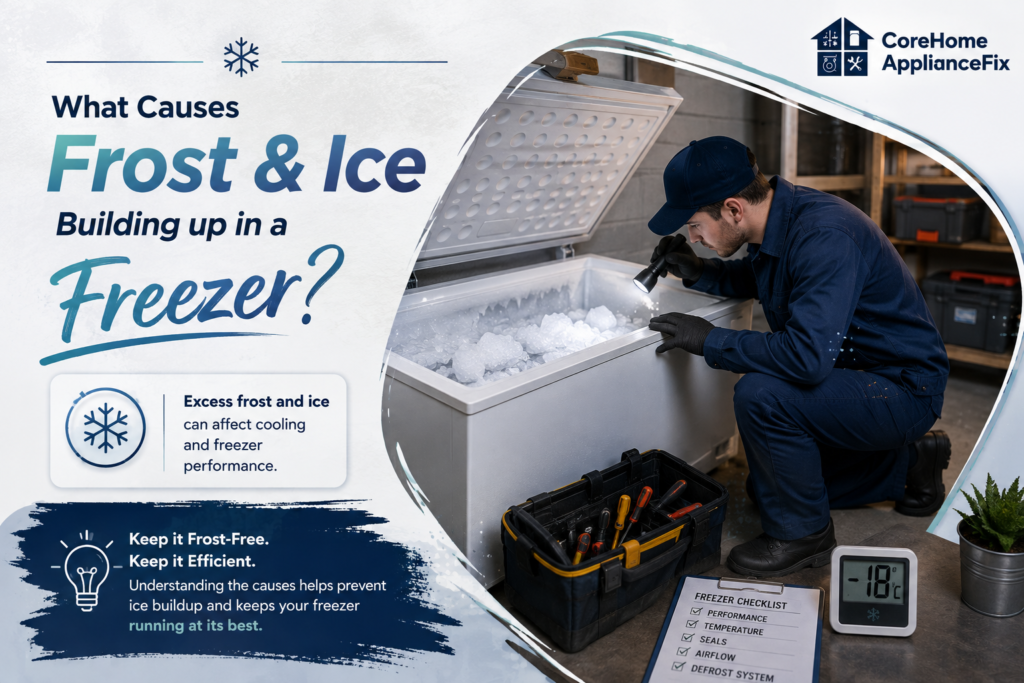
Frost and ice buildup in a freezer is almost always tied to warm, moist air entering the compartment faster than the defrost system can manage, or to the defrost system itself failing to run its cycle properly. In Dubai’s climate, high ambient humidity and heat load make freezers more prone to this than in cooler regions, especially if the door seal has weakened.
The most common causes include:
- Damaged or poorly sealed door gasket
- Door left open too long or too frequently
- Failed defrost timer, defrost thermostat, or defrost heater
- Blocked air vents restricting normal air circulation
- Overloading the freezer, which traps moisture near the walls
- Warm air entering through the ice maker’s dispenser chute
- A freezer left in a location with poor ventilation around the unit
Since frost, general ice buildup, and ice maker failure often share the same root cause, identifying where the frost is concentrated and when it started helps narrow down the actual fault before assuming a component needs replacing.
Why Is the Freezer Building Up Excessive Frost?
Excessive frost usually points to a defrost system component that has failed, most often the defrost timer, defrost thermostat, or defrost heater. A damaged door gasket is the second most common cause, since it allows warm, humid air to enter continuously rather than only when the door is opened.
How to Check
Inspect the door gasket along its full length for cracks, gaps, or areas where it no longer grips the door firmly. DEWA’s own energy-efficiency guidance recommends checking refrigerator and freezer door gaskets periodically for exactly this reason. Run the paper test: close the door on a strip of paper and check if it slides out with little resistance.
Solution
Replace a worn or damaged door gasket, since this is a straightforward fix that resolves a large share of frost complaints on its own. If the gasket is intact and frost is still building up quickly across the compartment, the defrost timer, thermostat, or heater likely needs inspection. These components aren’t easily user-serviceable, so it’s best to consult the freezer repair experts in Dubai, who can test each part and confirm the exact fault before replacement.
Why Is There Ice Building up Inside a Freezer?
Ice buildup that forms in solid patches, rather than a light frost layer, often indicates the defrost system has been failing for longer, allowing melted frost to refreeze into thicker ice, or that airflow is being blocked by overloading or obstructed vents.
How to Check
Look for ice concentrated around the back wall or vents, which usually points to blocked airflow rather than a door seal issue. Check whether the freezer is overloaded or whether food items are pressed directly against the back panel, since this restricts the air vents that circulate cold air. If ice has built up around the evaporator coils behind the back panel, this is a stronger sign the defrost system itself has stopped cycling correctly.
Solution
Redistribute freezer contents to clear the vents and keep items away from the back wall. If ice is limited to a few spots near the vents, clearing the obstruction is often enough. If ice has formed thickly around the evaporator coils, the defrost system needs professional diagnosis, since continuing to run the freezer with blocked coils reduces cooling efficiency and puts extra strain on the compressor.
Additionally, heavy frost buildup will eventually melt during defrost cycles and overflow the drain line onto your kitchen floor. If you notice pooling water beneath the unit, check our troubleshooting guide on why your fridge or freezer is leaking water to unclog the drain tube
Why Is a Ice Maker Not Working?
An ice maker that has stopped producing ice is commonly linked to a blocked or frozen water supply line, an incorrect freezer temperature, a jammed ejector arm, or frost buildup around the ice maker itself restricting its moving parts. In many cases, the same defrost system failure causing general frost buildup is also the reason the ice maker has stopped working.
How to Check
Check the water supply line behind or beneath the unit for kinks, disconnection, or visible ice buildup, since a blocked line is one of the most common causes. Confirm the freezer temperature is at the manufacturer’s recommended setting, since ice makers generally won’t cycle correctly if the compartment isn’t cold enough. Look for frost or ice around the ice maker’s tray and ejector arm, which can physically prevent it from cycling.
Solution
Clear visible ice from around the ice maker and confirm the water line isn’t kinked or frozen. Adjust the freezer temperature if it’s been set too high. If the ice maker still doesn’t produce ice after these checks, the water inlet valve, ice maker module, or control board may be at fault, and diagnosing these accurately requires proper tools. the freezer repair specialists in Dubai can test the water inlet valve and ice maker components directly rather than replacing parts based on guesswork.
Can Frost and Ice Buildup Be Repaired?
Yes. Most causes of frost and ice buildup, including a damaged door gasket, blocked vents, an overloaded freezer, or a failed defrost timer or thermostat, are commonly repaired without replacing the appliance.
More involved issues, such as a failed defrost heater or an ice maker module that’s stopped functioning, may require replacement parts, but repair is still typically more cost-effective than replacing the unit, particularly on a freezer that’s otherwise in good condition.
As with other appliance faults, the exact repair depends on an accurate diagnosis rather than the visible symptom alone. Two freezers with similar frost patterns can have entirely different underlying causes.
Related Reading: If your freezer’s temperature seems inconsistent as well, it may be worth reviewing our guide on Why Is the Fridge Not Cooling? Causes, Checks & Solutions, as frost and cooling issues often share the same root cause.
How to Prevent Frost and Ice Buildup in a Freezer
Simple maintenance includes:
- Check the door gasket periodically for gaps, cracks, or weak sealing.
- Avoid leaving the freezer door open longer than necessary.
- Keep food away from air vents and the back wall of the freezer.
- Avoid overloading the freezer, which restricts normal air circulation.
- Wipe down the door seal regularly to prevent debris from affecting the seal.
- Confirm the freezer temperature matches the manufacturer’s recommended setting.
- Keep the water supply line to the ice maker clear of kinks or obstructions.
Regular maintenance reduces strain on the defrost system and ice maker, both of which are more involved to repair once frost or ice has built up around them.
How Much Does Freezer Repair Cost in Dubai?
Most freezer frost and ice maker repairs in Dubai cost between AED 100 and AED 800+, depending on the fault and the parts involved. Simple repairs, such as replacing a door gasket or clearing a blocked water line, sit at the lower end. Repairs involving the defrost system or ice maker module cost more due to additional labor and specialized parts.
Estimated Repair Costs
- Basic repairs (gasket replacement, clearing blockages): AED 100–180
- Component replacements (defrost timer, thermostat, water inlet valve): AED 150–350
- Major repairs (defrost heater, ice maker module, compressor-related faults): AED 350–800
Keep in mind: the same symptom doesn’t always mean the same repair. A freezer with excessive frost might only need a new door gasket, while another with the same complaint could need a full defrost system repair. An accurate diagnosis ensures the repair cost reflects the actual fault rather than the visible symptom.
When Should You Repair or Replace a Freezer?
Repairing a freezer is usually worthwhile when the appliance is relatively new, the fault is limited to one component, and the repair cost is reasonable compared with replacement.
Repair is often a practical choice when the issue involves:
- Damaged door gasket
- Blocked air vents
- Faulty defrost timer or thermostat
- Water inlet valve or ice maker module faults
- Overloading-related airflow issues
Replacement may be worth considering when the freezer has recurring frost or ice problems despite repairs, multiple failing components, or a defrost heater or control board failure on an older unit where repair costs start approaching the price of a new appliance. For a deeper breakdown of costs and when replacement makes more sense, check out our complete guide on when to repair or replace your freezer.
Frequently Asked Questions
Is a small amount of frost in the freezer normal?
A thin layer of frost that clears on its own between defrost cycles is normal. Frost that keeps thickening, spreads across the walls, or doesn’t clear after a day or two usually indicates a fault in the defrost system or door seal.
Can a bad door seal cause ice buildup?
Yes. A damaged or poorly sealing door gasket lets warm, humid air enter continuously, which condenses and freezes inside the compartment, leading to frost and eventually thicker ice buildup near the door.
Why does the ice maker have frost around it but still isn’t working?
Frost around the ice maker often blocks the tray or ejector arm mechanically, preventing it from cycling correctly, even if the water supply and temperature are otherwise fine. Clearing the frost and checking for an underlying defrost fault usually resolves this.
Can overloading a freezer cause frost buildup?
Yes. Overloading blocks air vents and restricts normal air circulation, which can trap moisture near the walls and contribute to frost forming faster than usual.
Is it safe to chip away built-up ice in a freezer?
It’s best to avoid using sharp tools to remove ice, since this can damage the interior lining or evaporator coils. Turning off the freezer and allowing the ice to melt naturally, or using a manual defrost cycle if the appliance has one, is safer.
Does Dubai’s climate make freezers more prone to frost buildup?
Yes. Higher ambient humidity and heat load mean more moisture enters the freezer each time the door opens, which puts extra demand on the defrost system and door seal compared to cooler climates.
Conclusion
Frost building up in a freezer, ice forming in solid patches, or an ice maker that’s stopped working usually trace back to the same source: a defrost system component that isn’t cycling correctly, or a door seal that’s letting in more warm air than the system can manage.
Simple checks such as inspecting the door gasket, clearing blocked vents, and confirming the freezer temperature can resolve some cases. However, frost or ice that keeps returning despite these checks usually points to a defrost timer, thermostat, or heater that needs professional diagnosis.
Identifying where the frost or ice is concentrated, and whether it’s affecting the ice maker as well, helps avoid unnecessary part replacement and gets the freezer back to reliable performance faster. For ongoing frost or ice buildup, proper diagnosis is the best way to protect the appliance from further strain.